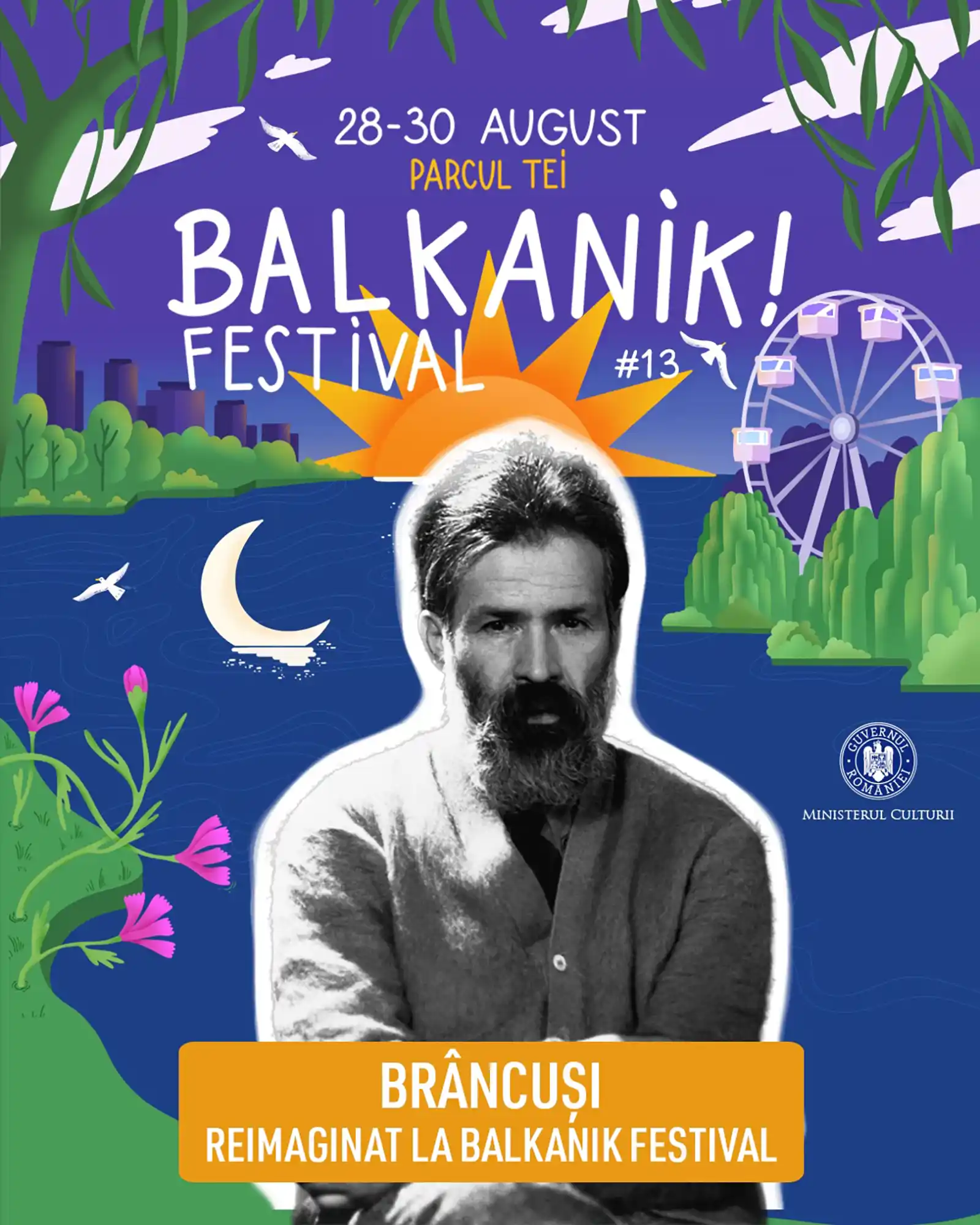
"Forme care tac / Forme care luminează – Constantin Brâncuși at Balkanik Festival" is a program of contemporary artistic interventions that activates Constantin Brâncuși's aesthetic principles — the reduction to essence, verticality, duration, silence and light — within the setting of a festival devoted to reinterpreting tradition. The project unfolds along two complementary lines: the multimedia installation "Pasărea (care nu atinge pământul)" (The Bird that does not touch the ground), a vertical structure animated by minimalist video mapping and a subtle response to live sound, and the performative intervention "Masa Tăcerii" (The Table of Silence), a collective listening ritual that briefly suspends the festival's rhythm. Together, they create a participatory framework for reflection and experience, sharpening the audience's attention, perception and direct relationship with the cultural space.
The aim of "Forme care tac / Forme care luminează – Constantin Brâncuși at Balkanik Festival" is to bring Constantin Brâncuși's aesthetic and conceptual principles — reduction to essence, duration, verticality, silence and light — to life through contemporary artistic interventions woven into the flow of a festival dedicated to reinterpreting tradition, creating a framework of reflection and participatory experience that sharpens the audience's attention, perception and direct relationship with the cultural space.
In the context of the Ministry of Culture's launch of the "Brâncuși150" program, dedicated to marking 150 years since the birth of Constantin Brâncuși and to encouraging a contemporary reinterpretation of his artistic legacy, the "Forme care tac / Forme care luminează" project sets out to activate Brâncuși's aesthetic and conceptual principles as living tools for reflection and creation. Its aim is to translate concepts such as the essentialization of form, verticality, duration, silence and light into a contemporary artistic language, turning them into participatory experiences that reshape the public's relationship with shared space, with time and with their own capacity for attention. Through a multimedia installation and a collective performative intervention, the project does not seek to reproduce Brâncuși's iconography, but rather to take on his method: reduction to essence, the refusal of gratuitous spectacle, a focus on presence. This effort supports the "Brâncuși150" program's aim of fostering contemporary creation inspired by Brâncuși's work and thinking, reinforcing his relevance to today's artistic discourse and opening up, to a wide public, forms of cultural experience that encourage reflection, slowing down, and a direct relationship with the perceptual substance of art.
Brâncuși, reimagined at Balkanik Festival: a monumental sculpture brought to life through video mapping, and a collective ritual of silence
"Forme care tac / Forme care luminează – Constantin Brâncuși at Balkanik Festival" brings the artist's legacy into the present through a multimedia installation, light, performance and audience participation. August 28–30, 2026 | Parcul Tei, Bucharest.
Brâncuși, in the present: Forme care tac / Forme care luminează
How can Constantin Brâncuși be brought into the present without reproducing his work, quoting it literally, or turning it into a commemorative object? On the 150th anniversary of the artist's birth, Balkanik Festival – Home of World Music #13 offers an answer with "Forme care tac / Forme care luminează – Constantin Brâncuși at Balkanik Festival", a program of contemporary artistic interventions that draws on several of the fundamental principles of his artistic thinking: the essentialization of form, verticality, duration, silence and light.
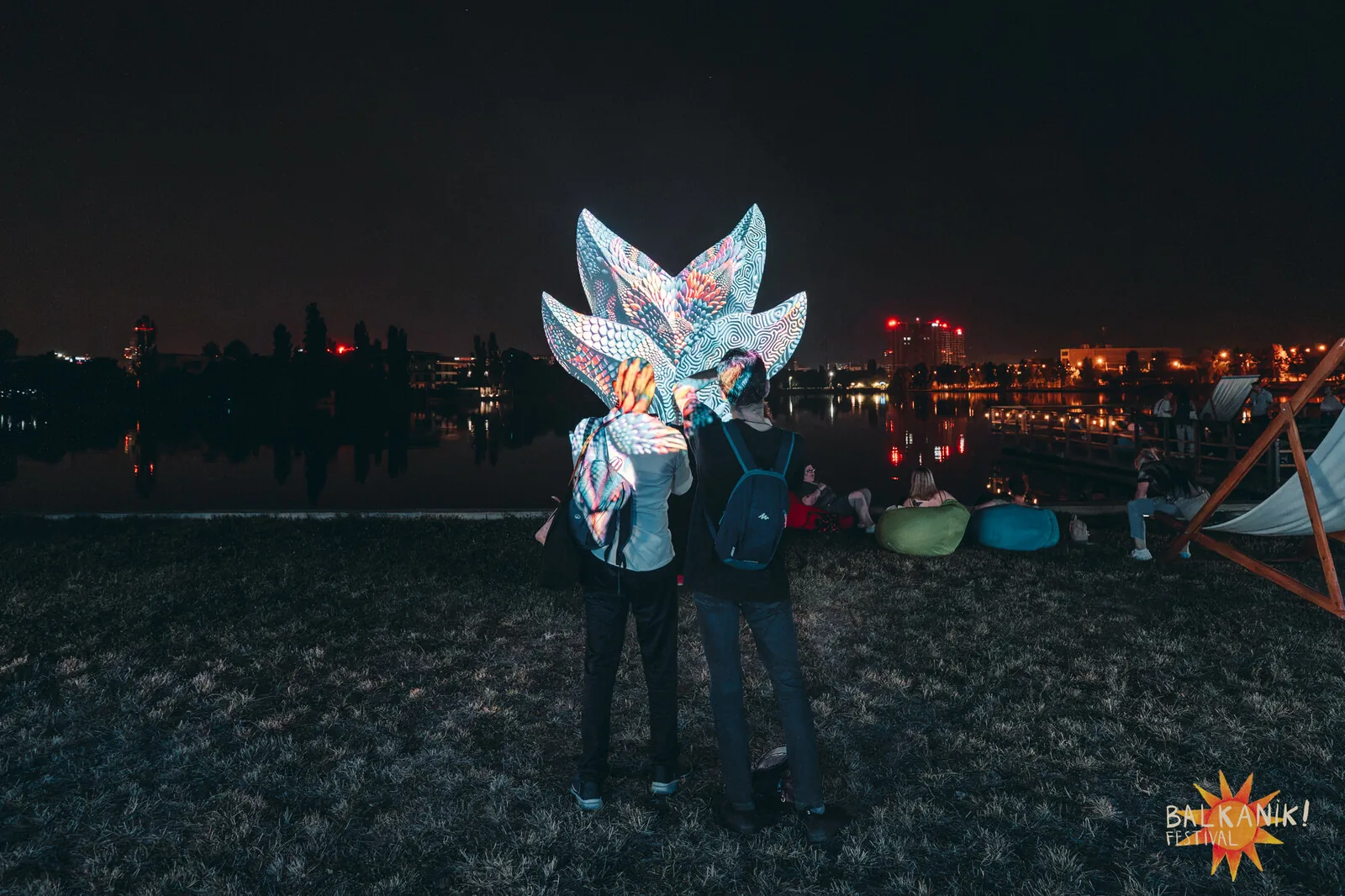
The project brings two complementary interventions to Parcul Tei: "Pasărea (care nu atinge pământul)", a monumental sculpture-installation created by set designer and artist Raluca Pavel, which transforms after nightfall through video mapping by multimedia artist Adistu, and "Masa Tăcerii", a collective performative intervention that briefly suspends the festival's rhythm and invites the audience into a shared exercise of listening and presence.
The undertaking is part of the "Brâncuși150" program, dedicated to marking 150 years since the birth of Constantin Brâncuși and to encouraging contemporary creation inspired by his work and thinking. Rather than reproducing the artist's now-familiar iconography, the project attempts to work with his method: the reduction to essence, the relationship between matter and light, the search for movement within a static form, and the capacity of silence to become, itself, expression.
The bird that does not touch the ground
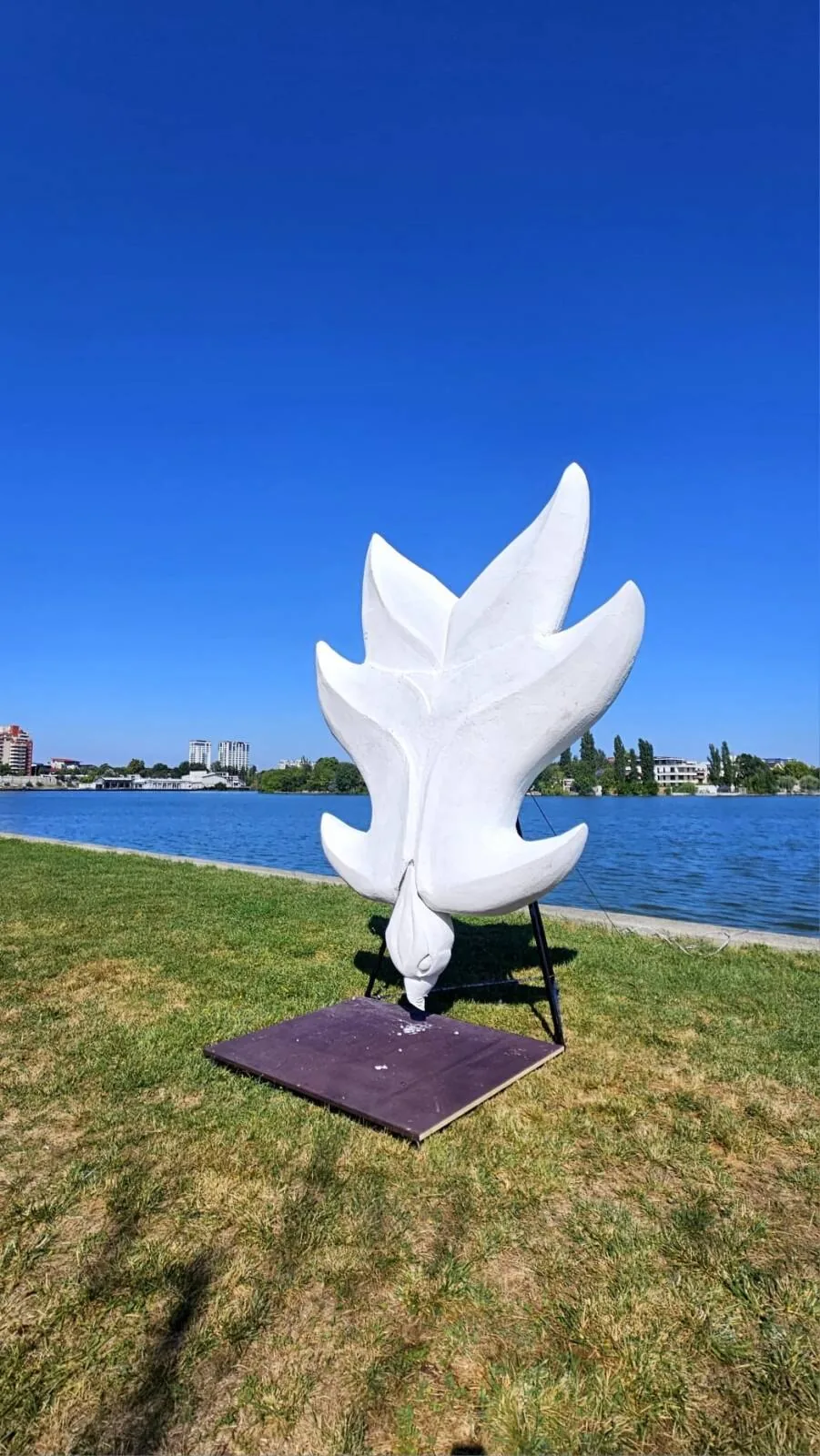
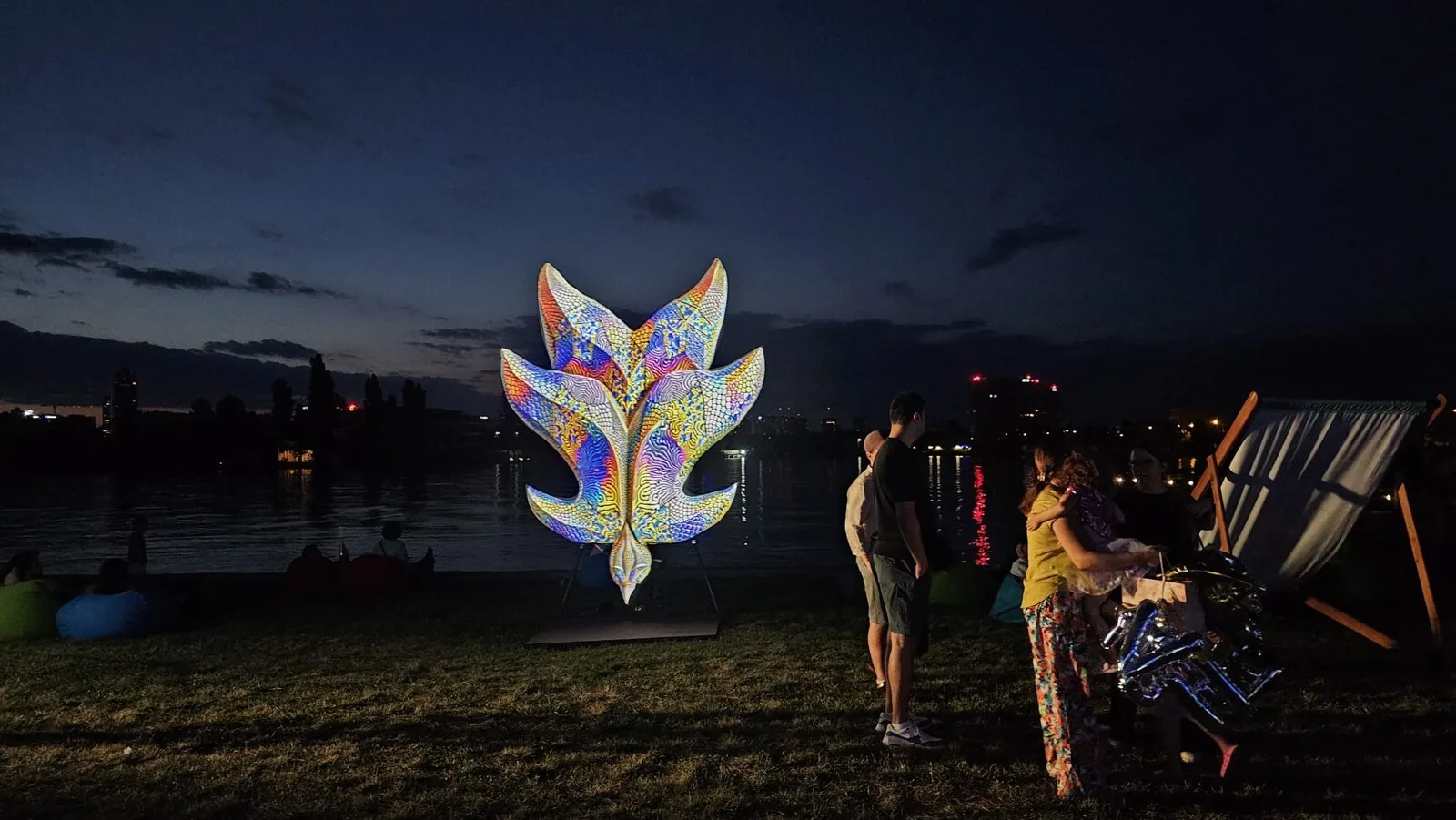
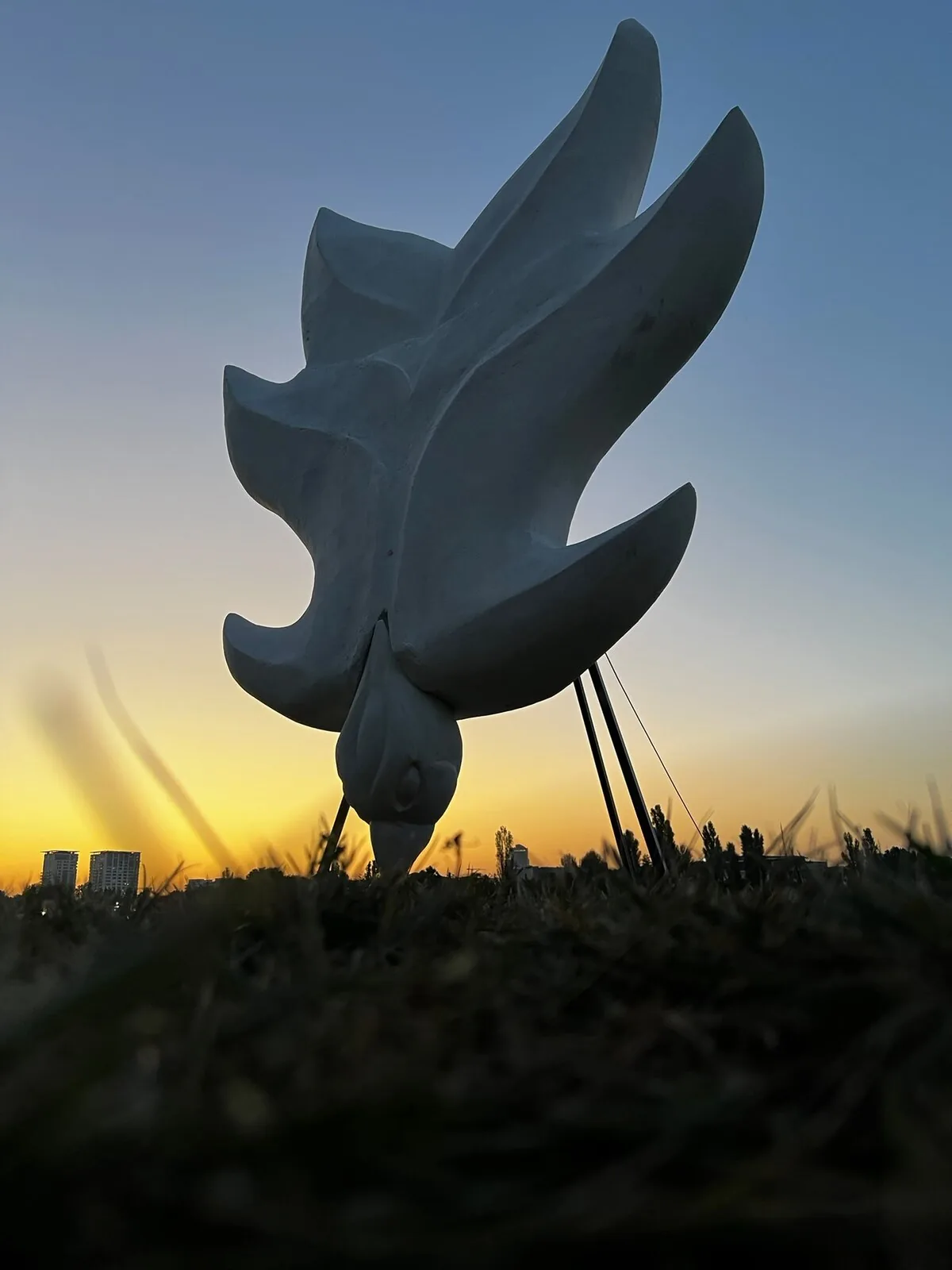
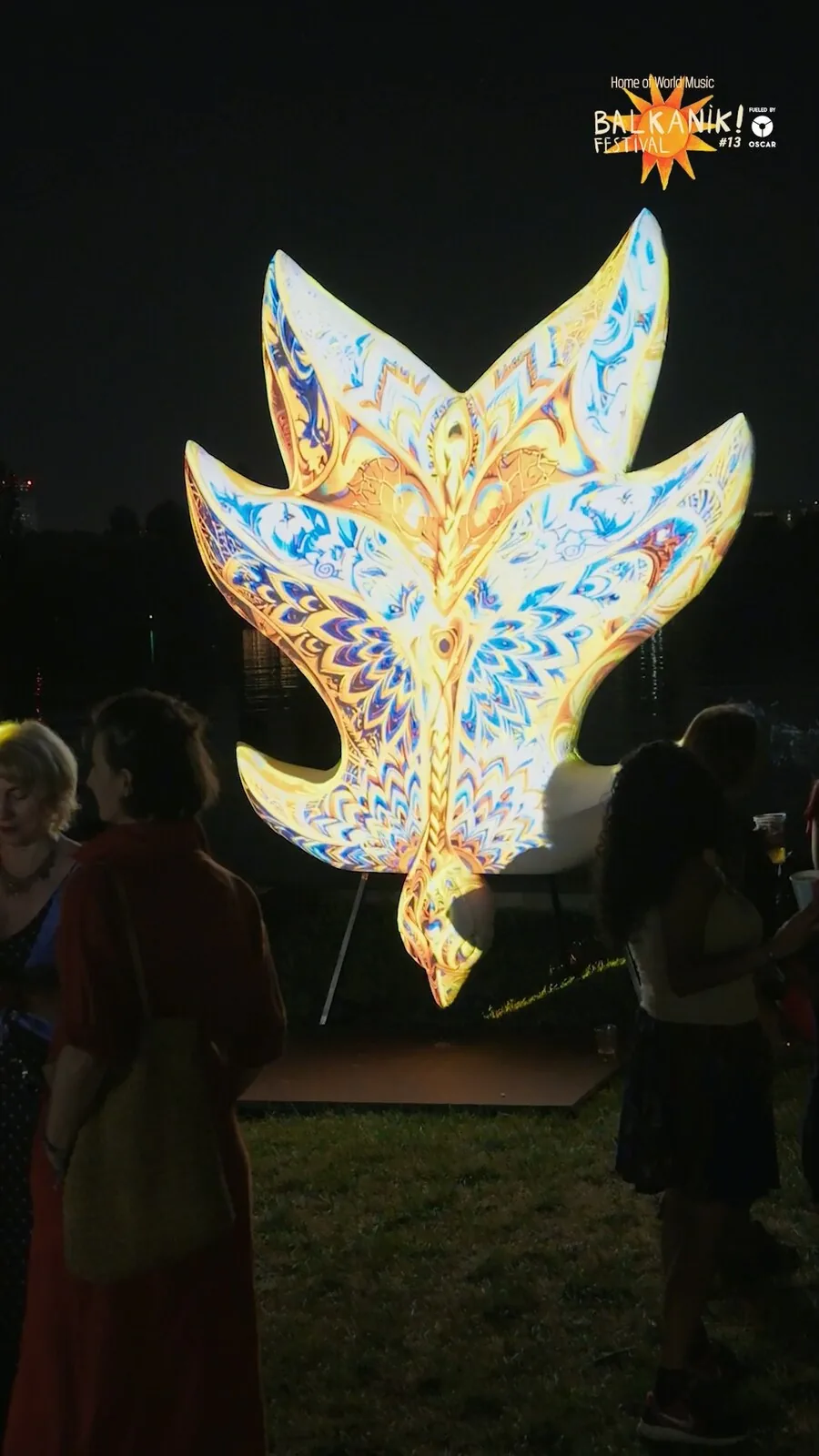
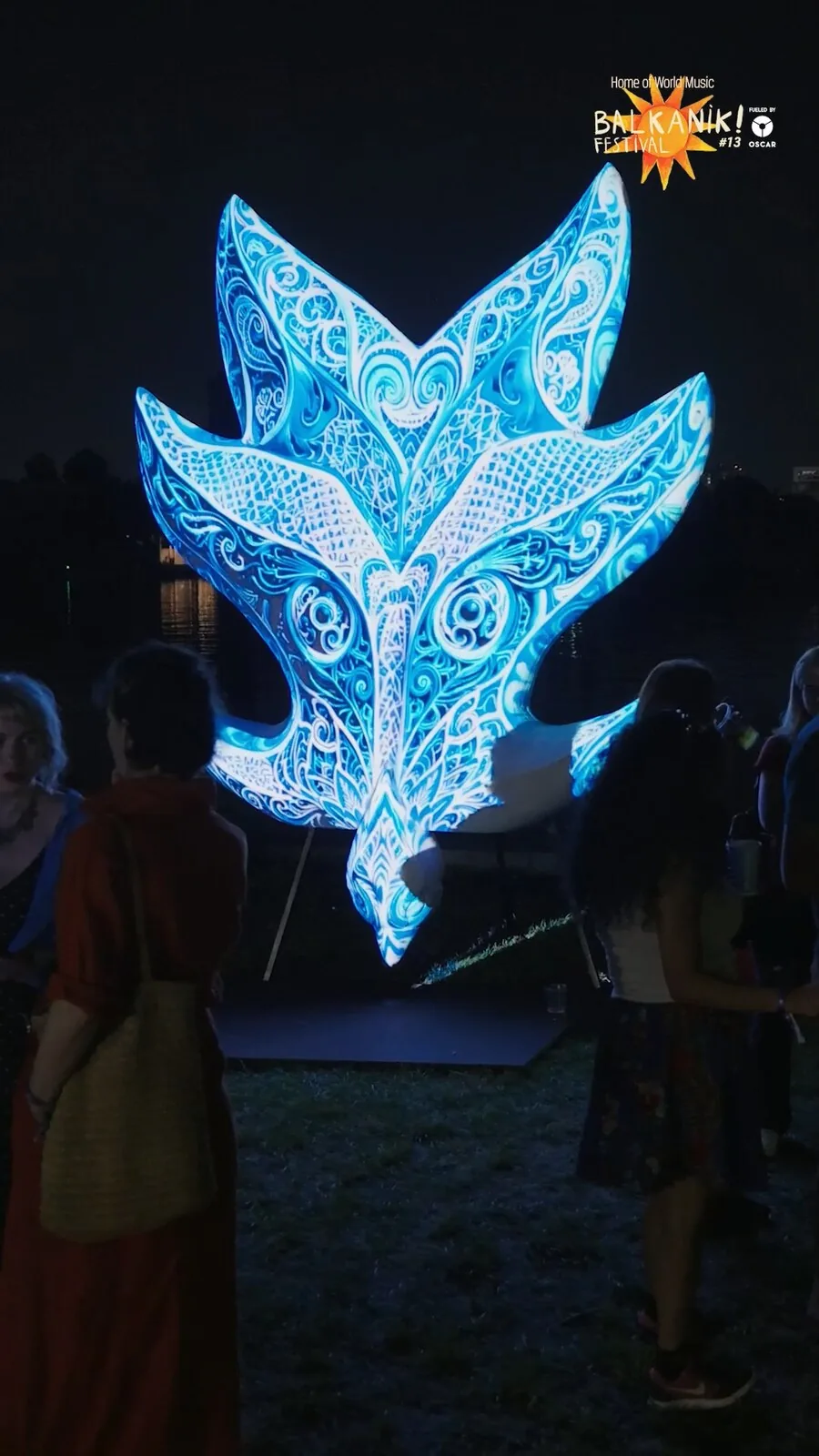
Standing roughly 3.5 meters tall and 2.5 meters wide, "Pasărea (care nu atinge pământul)" will become one of the visual landmarks of Balkanik Festival's 13th edition. Created by Raluca Pavel, the work draws on the structure of wings, the aerodynamic form of a bird, and the idea of ascent, without reproducing any of Brâncuși's celebrated "Birds". Its recognizable elements are reduced to volumes, voids and surfaces, forming a vertical, organic structure in which light and shadow constantly shape the perception of form. The dialogue with Brâncuși happens, in this way, through method: just as the sculptor progressively stripped away figurative detail to arrive at a form capable of suggesting essence and movement, the installation starts from a recognizable point of reference in nature and transforms it into an almost abstract presence. The bird becomes less a body and more a possibility of flight.
Built from polystyrene carved over a metal frame and finished with resin and a matte white surface, the work embraces the materials and technologies of the present. It does not attempt to mimic marble or bronze; instead, it is designed for the space of the festival, for the outdoors, for light and for the audience's collective experience. Above all, the installation was conceived from the outset to lead two successive lives: by day it is sculpture — a white, vertical, seemingly silent body that natural light reshapes hour by hour. By night, it begins to come alive.
From matter to light and sound
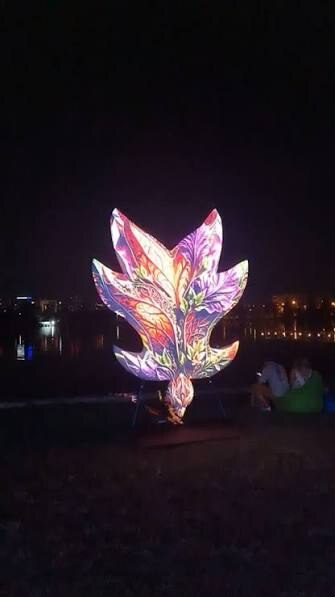
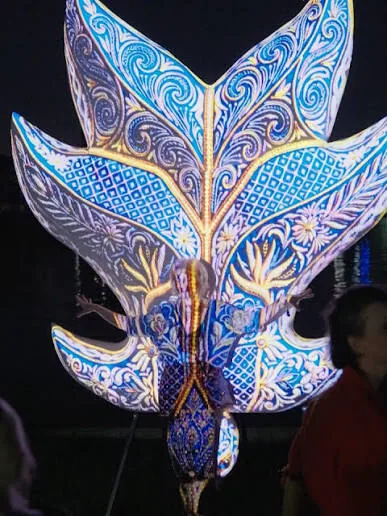
Once darkness falls, "Pasărea (care nu atinge pământul)" is brought to life by video mapping created especially by Adistu. The white surface stops being mere finish and becomes matter for the image: light traces the sculpture's volumes and hollows, accentuates them, multiplies them, dissolves them, or creates the illusion of their transformation. The projection does not use the object as a simple screen — the physical form dictates the image, and the image, in turn, reshapes how we perceive the form. A static body gains duration and motion, and the work comes to exist somewhere between sculpture, set design, cinema and multimedia installation.
The visual world is accompanied by a sound composition built from synthesizers, birdsong and celestial textures, extending the sensation of ascent beyond the visual object. Sound and light do not literally illustrate flight — they try to create the perception of lifting off the ground. At this point, the dialogue with Brâncuși deliberately arrives in the present. If one of his great preoccupations was finding a form that could express flight without simply depicting a bird in flight, the installation carries that question forward with the tools of contemporary art: projection, algorithm, generative imagery, artificial intelligence and electronic sound. Form becomes light. Light gains motion. And the sculpture, for a few hours, seems to lose its weight.
Raluca Pavel — sculpture as space
Raluca Pavel is a set designer and installation artist, trained in architecture and product design, who has spent more than a decade developing an interdisciplinary practice at the intersection of set design, architecture, design and construction. She works with wood, textiles, metal, leather and contemporary materials, combining traditional construction techniques with digital fabrication tools such as CNC machining, laser cutting, 3D printing, modeling and moldmaking. Her practice follows a work's entire arc, from concept and design through execution, assembly and the relationship of the object to the space it comes to inhabit. For Balkanik Festival, "Pasărea (care nu atinge pământul)" is conceived as a presence within the landscape: a work the public passes by during the day and rediscovers, radically transformed, as night falls.
Adistu — explorer of digital worlds
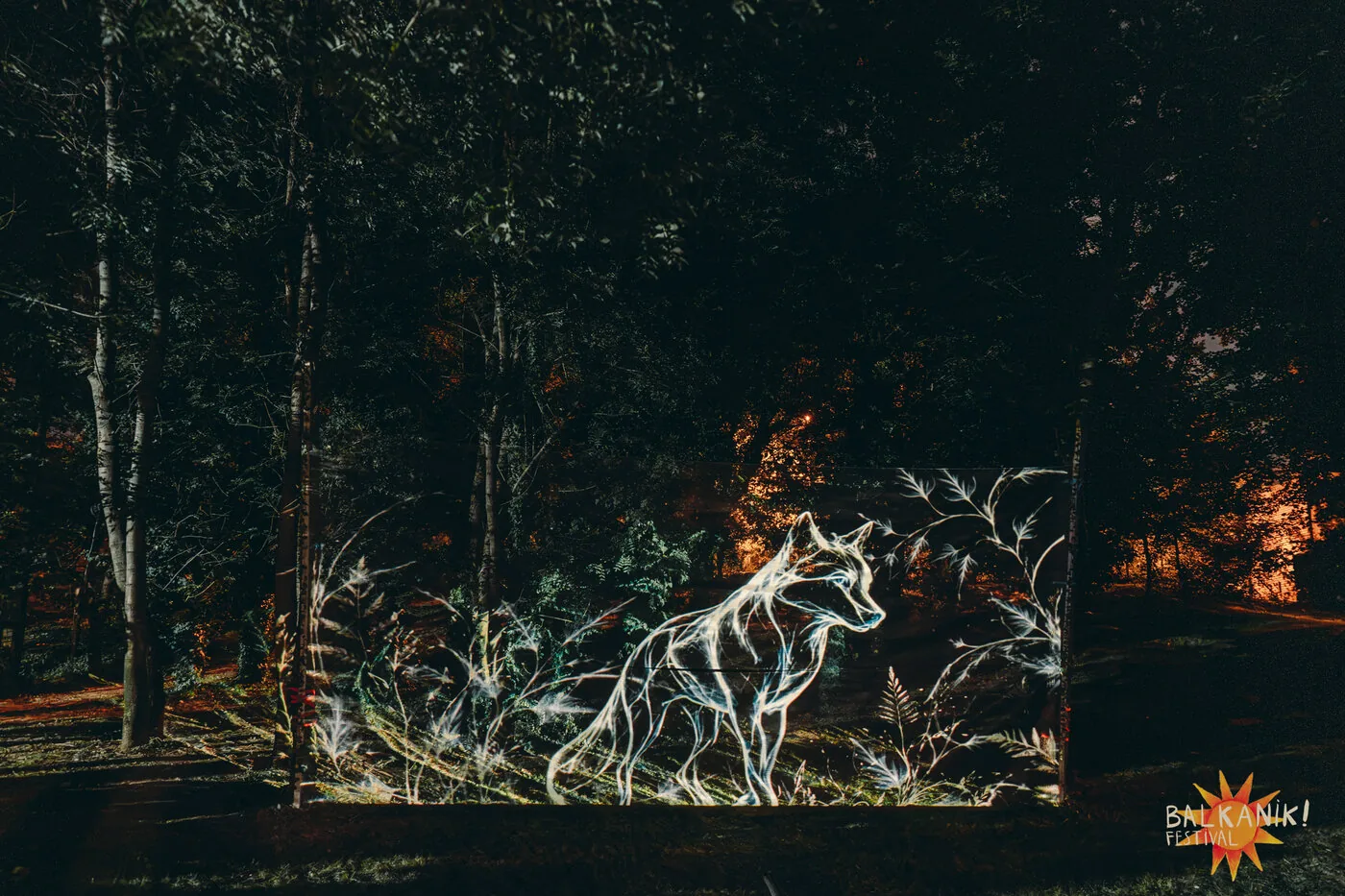
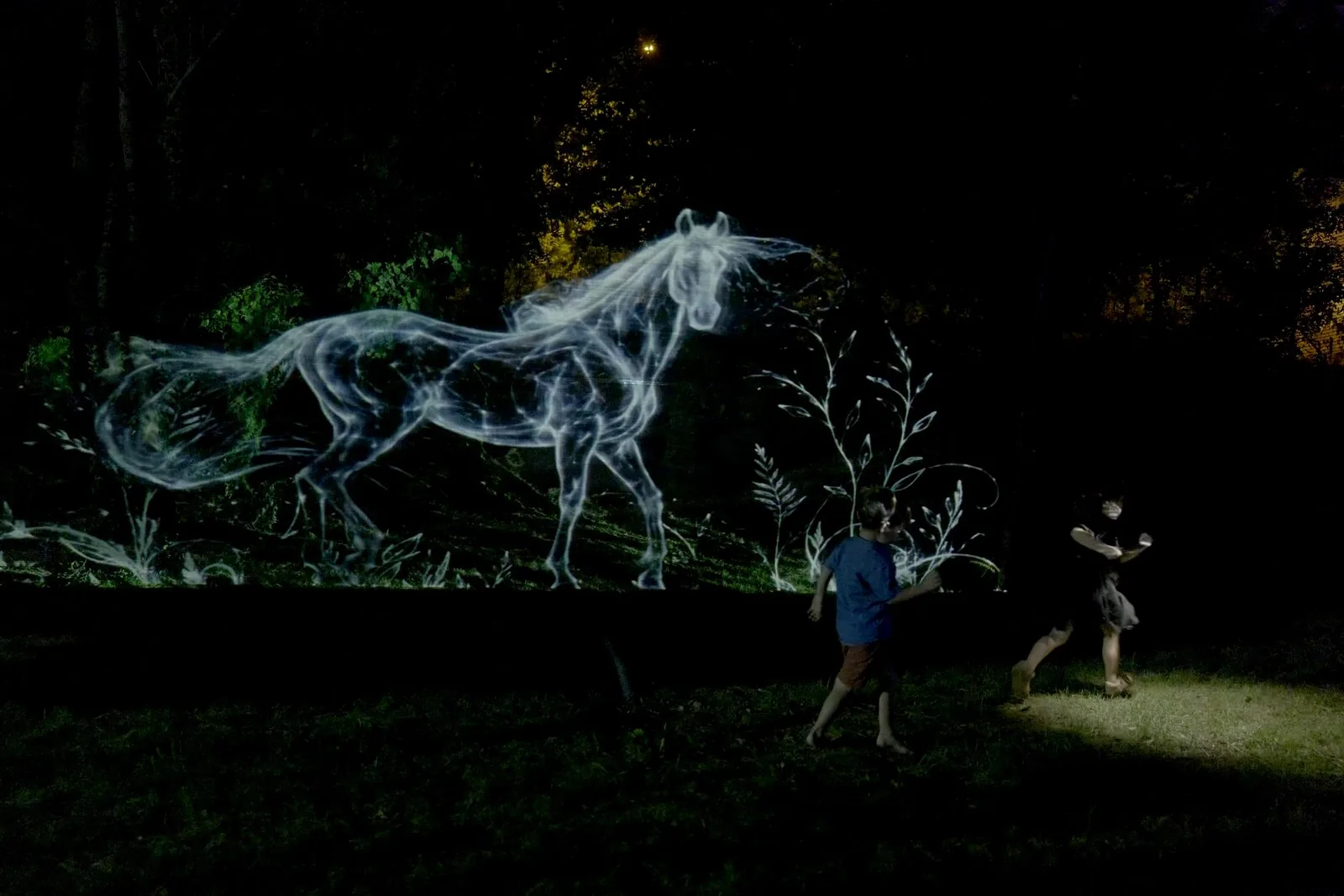
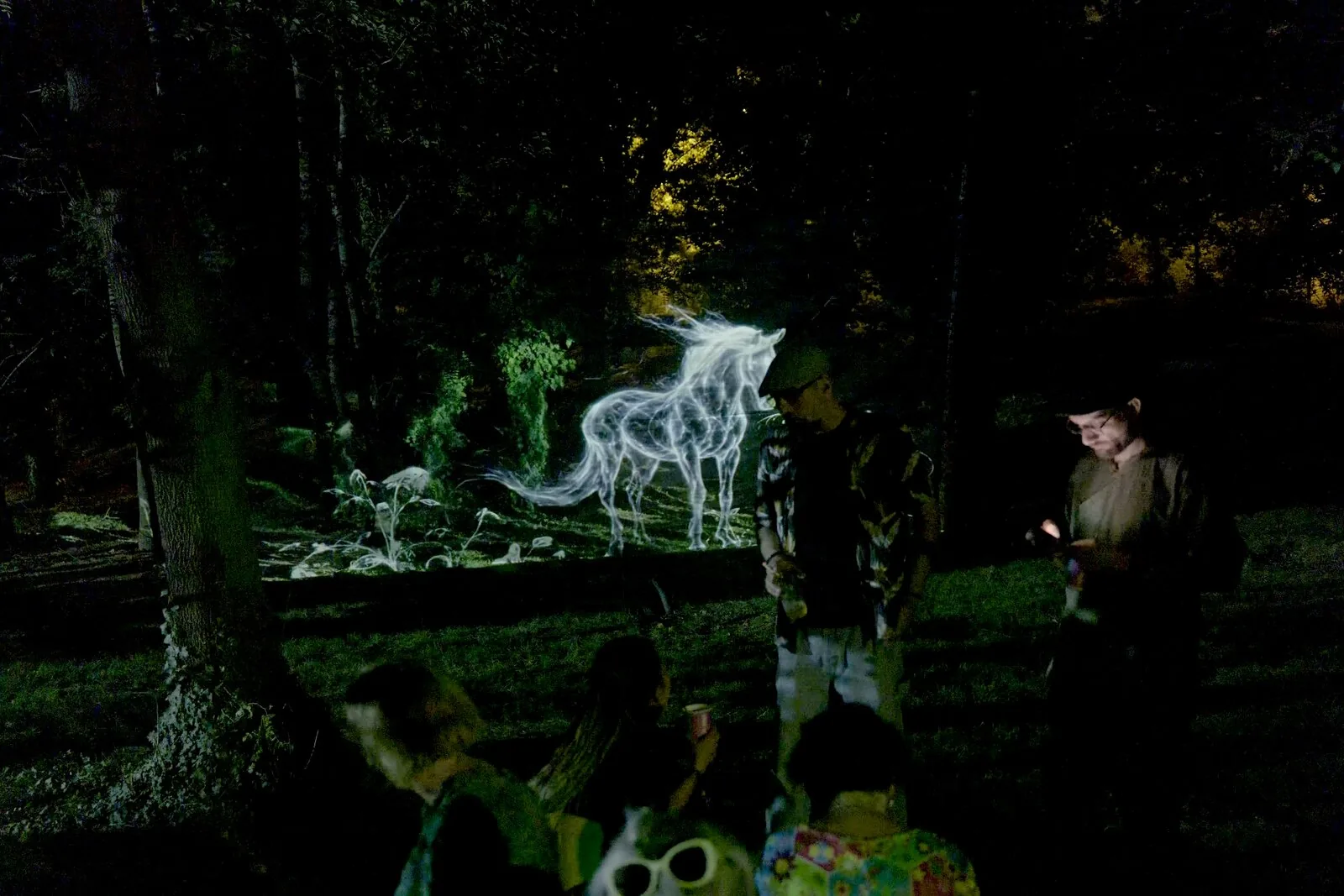
The installation's second artistic voice belongs to Adistu, a multimedia artist whose practice brings together fractal geometry, procedural organic structures, artificial intelligence and moving image, building experimental, playful and surreal visual universes. One of the central tools of his process is pareidolia — the mechanism by which the mind finds recognizable figures and meanings in abstract forms. For this reason, Adistu defines himself more as an explorer than as an author in the conventional sense: he searches for forms within virtual fields, much like a photographer searching for organisms in a landscape, then works on them through layers of movement, depth, tracking and video mapping. Over the years, his projections have transformed palaces, churches, medieval towers, 360° domes, forests and caves, as well as less predictable surfaces — a boat, an ambulance, a motorcycle. His practice spans architectural video mapping, live performance, interactive installations, animated video, virtual reality, holographic installations, film and digital painting. He has presented exhibitions, films and performances in more than 20 countries and has taken part in events such as the Berlin Festival of Lights, Boom Festival in Portugal, and Anim'Est. He is also the director of Tripoteca, a touring film and art festival that has reached 15 countries and more than 25 venues, and leads workshops and talks on animation, digital art and reflection on technology.
In the installation at Balkanik, the two practices meet directly: Raluca Pavel builds the body, Adistu sets it in motion through light, and the sound world gives it a third dimension. By day, we have an object. By night, that same object becomes an audiovisual organism.
Masa Tăcerii (The Table of Silence): what happens when a festival falls silent?
The project's second intervention starts from a question that feels almost paradoxical for a music festival: what happens when thousands of people stop, for a few moments, making noise? "Masa Tăcerii" takes the form of a collective ritual of listening and presence, inserted into the flow of Balkanik Festival. For a short time, the sequence of concerts, conversations, sounds and movement is suspended, and the audience is invited to take part in a shared exercise of attention. Silence is treated as an artistic material. In a space built around music, it suddenly becomes perceptible: you hear the water, the trees, distant movement and voices, breathing, and the presence of others. For a few moments, what remains at the center of the experience is the simple fact of being together. The intervention thus works as a counterpoint to the festival's energy. In a culture defined by acceleration, overstimulation and the fast consumption of images, the collective act of slowing down and listening becomes, in itself, a form of participation.
Brâncuși and the idea of living heritage
"Forme care tac / Forme care luminează" connects naturally with the theme of Balkanik Festival's 13th edition, The Sounds of Heritage. The Rhythm of Now.
For more than a decade, Balkanik has explored how heritage can continue to exist through transformation: traditional music entering into dialogue with electronica, old repertoires reinterpreted by contemporary artists, crafts and cultural practices that pass between generations and geographies.
The same question is now put to Constantin Brâncuși's legacy. The project does not reconstruct the past, nor does it bring replicas of canonical works into the festival. Instead, it puts several of the artist's questions back into circulation: how much can be taken away before only the essence remains? How can a static form express movement? What does light do to a sculpture? What can silence say?
And the space of the festival radically changes the context in which these questions are asked. Amid the concerts, the dancing, and a community of thousands of people, Brâncuși is not set apart in a space meant for contemplation. He enters the flow of everyday, shared life. For three days, form, light, sound and silence share the same space.
For more than a decade, the festival has explored how heritage can continue to exist through transformation: traditional music entering into dialogue with new architectures of sound, old repertoires reinterpreted by contemporary artists, crafts, visual arts and cultural practices that pass between generations and geographies. The same question is now put to Constantin Brâncuși's legacy. The project does not try to reconstruct the past, nor to bring replicas of canonical works into the festival. Instead, it takes up several of the artist's questions — how much can be taken away before only the essence remains? how can a static form suggest movement? what does light do to a sculpture? what can silence say? — and puts them back into circulation, through the tools of the present.
It is precisely the space of a festival that makes the experiment relevant. Amid the concerts, the dancing, and a community of thousands of people, Brâncuși enters the flow of everyday, shared life.
The project is funded by the Ministry of Culture.
Further details on the artists behind the installations and the festival's interactive activities: Radio România Cultural.

Project funded by the Ministry of Culture, carried out as part of the Brâncuși150 program and integrated into the 13th edition of Balkanik! Festival →.
A cultural association since 2011 — festivals, screenings and workshops for the general public and for professionals in the cultural sector.