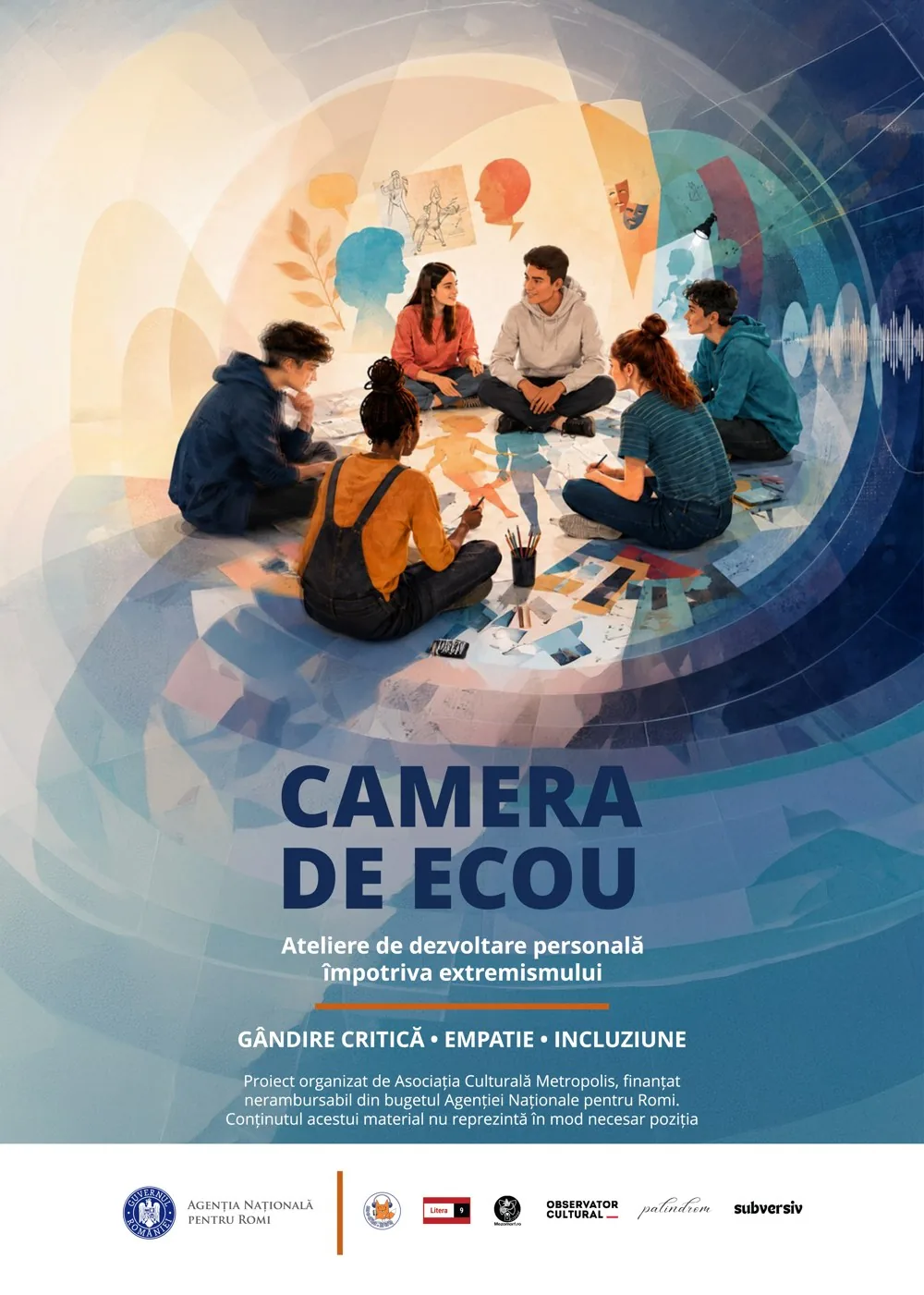
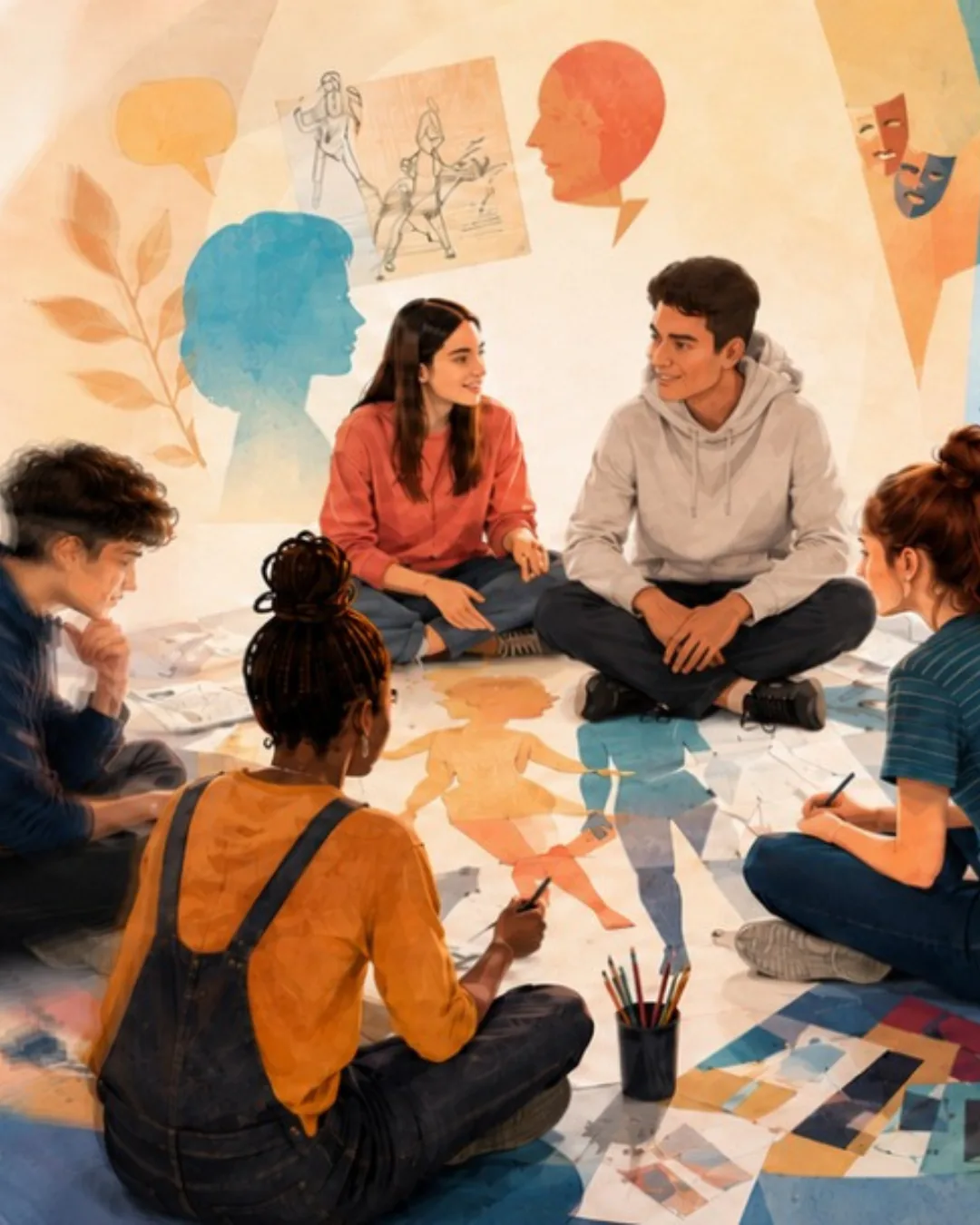
"Camera de ecou" (Echo Chamber) is a project of Asociația Culturală Metropolis dedicated to preventing discrimination, intolerance and the influence of extremist rhetoric among teenagers. Through non-formal education, intercultural dialogue and artistic expression, the project helps young people recognize stereotypes, hate speech and the manipulation tactics they encounter in public spaces and online.
The project will bring 30 personal-development and artistic-expression workshops for 750 teenagers from Bucharest. Participants will work with methods such as body mapping, storytelling, role play, theater improvisation, puppetry and marionettes, movement, drawing and creative writing. The activities create a safe space where young people can explore their identity, build self-confidence, empathy and critical thinking, and craft their own creative responses to discrimination and extremism.
The project also includes three training workshops for 60 teachers and educational instructors, giving them practical tools for integrating intercultural education and themes of inclusion and anti-discrimination into their everyday work.
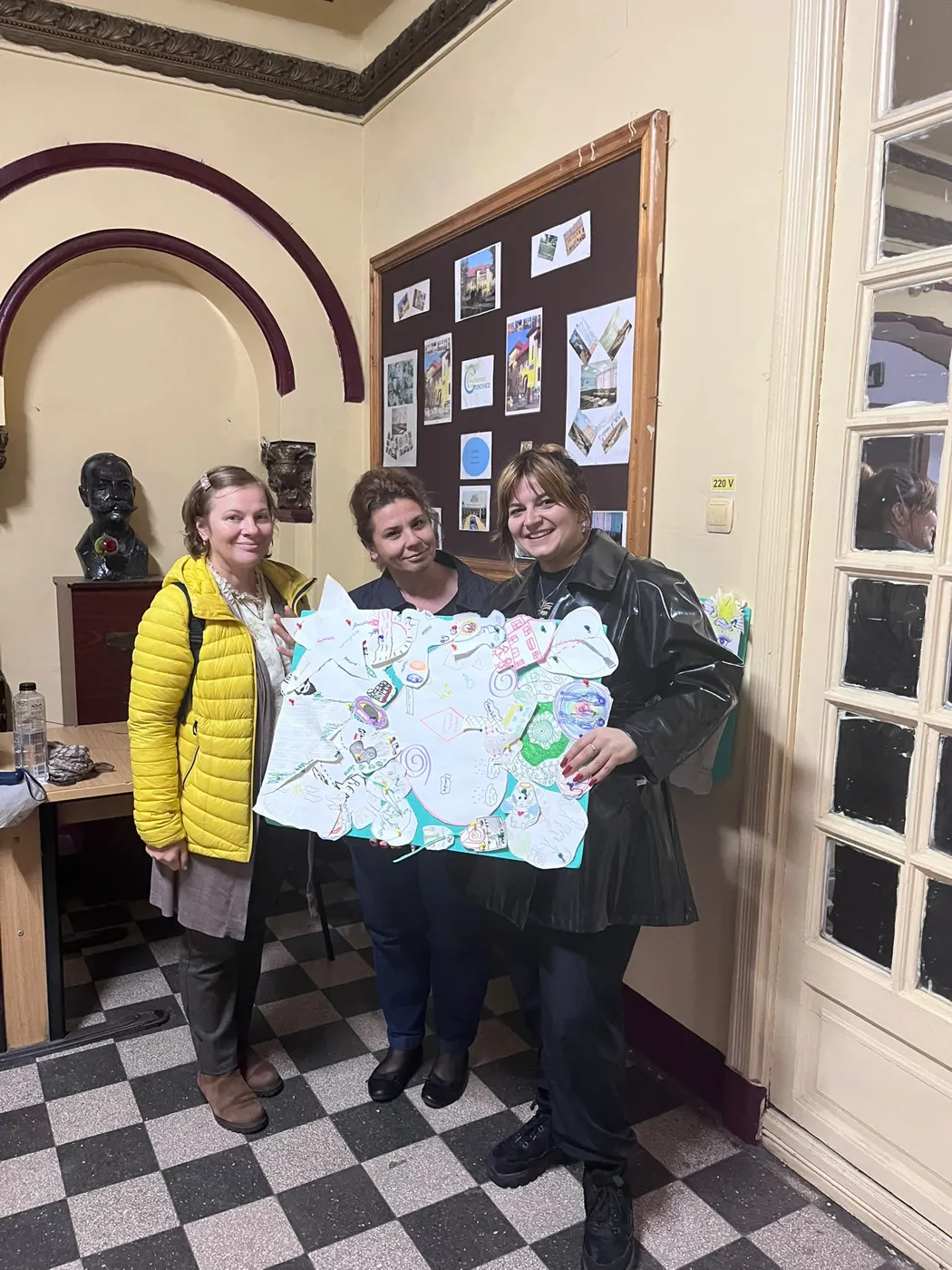
The artwork, stories and multimedia materials created by the teenagers will be brought together in an interactive exhibition open to the public. In this way, young people's voices and experiences become the starting point for a dialogue about identity, belonging, diversity and civic participation.
Through art and education, "Camera de ecou" aims to turn spaces that amplify prejudice into places of encounter, reflection and solidarity.
Two materials created as part of the project, available to teachers, educators and anyone working with teenagers. You can browse them online or download them for free.
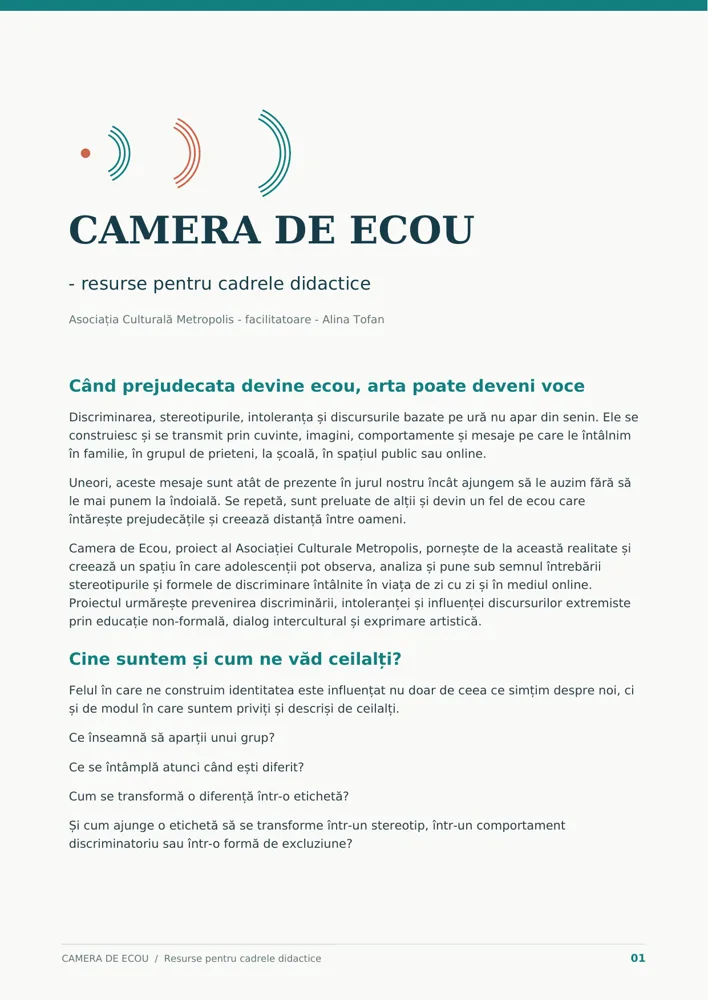
The companion material to the workshops, written by facilitator Alina Tofan. It explains the project’s themes (identity and belonging, group dynamics, bullying, the path from prejudice to discrimination) and suggests artistic exercises and reflection questions that can be used in the classroom. In Romanian.
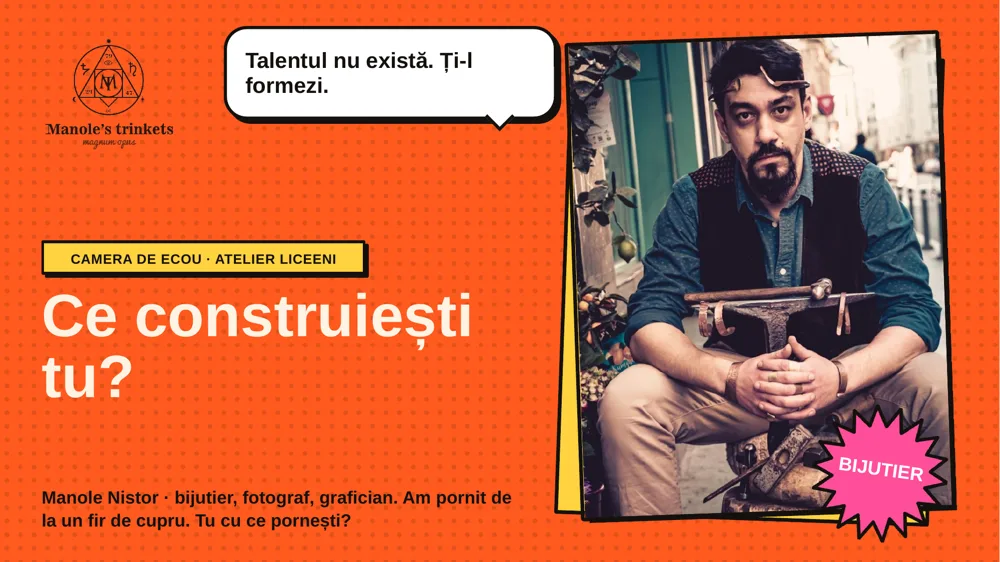
The presentation used by jeweller, photographer and graphic designer Manole Nistor in his meeting with the students: his path from a first strand of copper to his own workshop, the lessons learned along the way, and exercises about the small steps that build a path of your own. In Romanian.
The press releases issued during the project, in Romanian. You can read them directly on the site, with the option to zoom in on the text, or download them as PDF files.
The project's core activity consists of organizing and running a series of participatory personal-development and artistic-expression workshops for teenagers. The workshops create space for reflecting on stereotypes and forms of anti-Roma discrimination present in public discourse and online.
The workshops aim to build self-confidence, emotional expression, relationship-building and collaboration, as well as critical and empathetic thinking that helps prevent discrimination, intolerance and extremist influences.
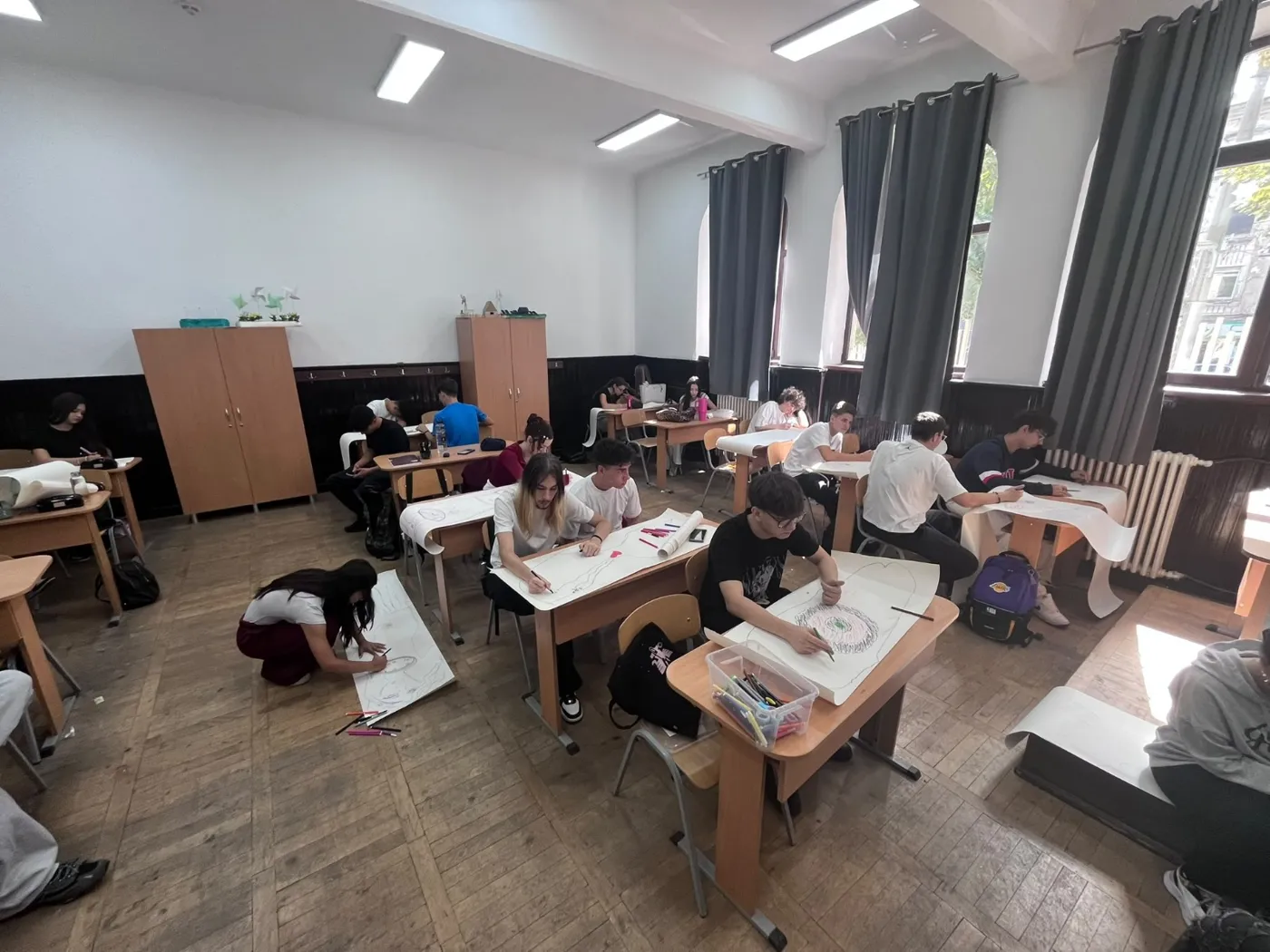
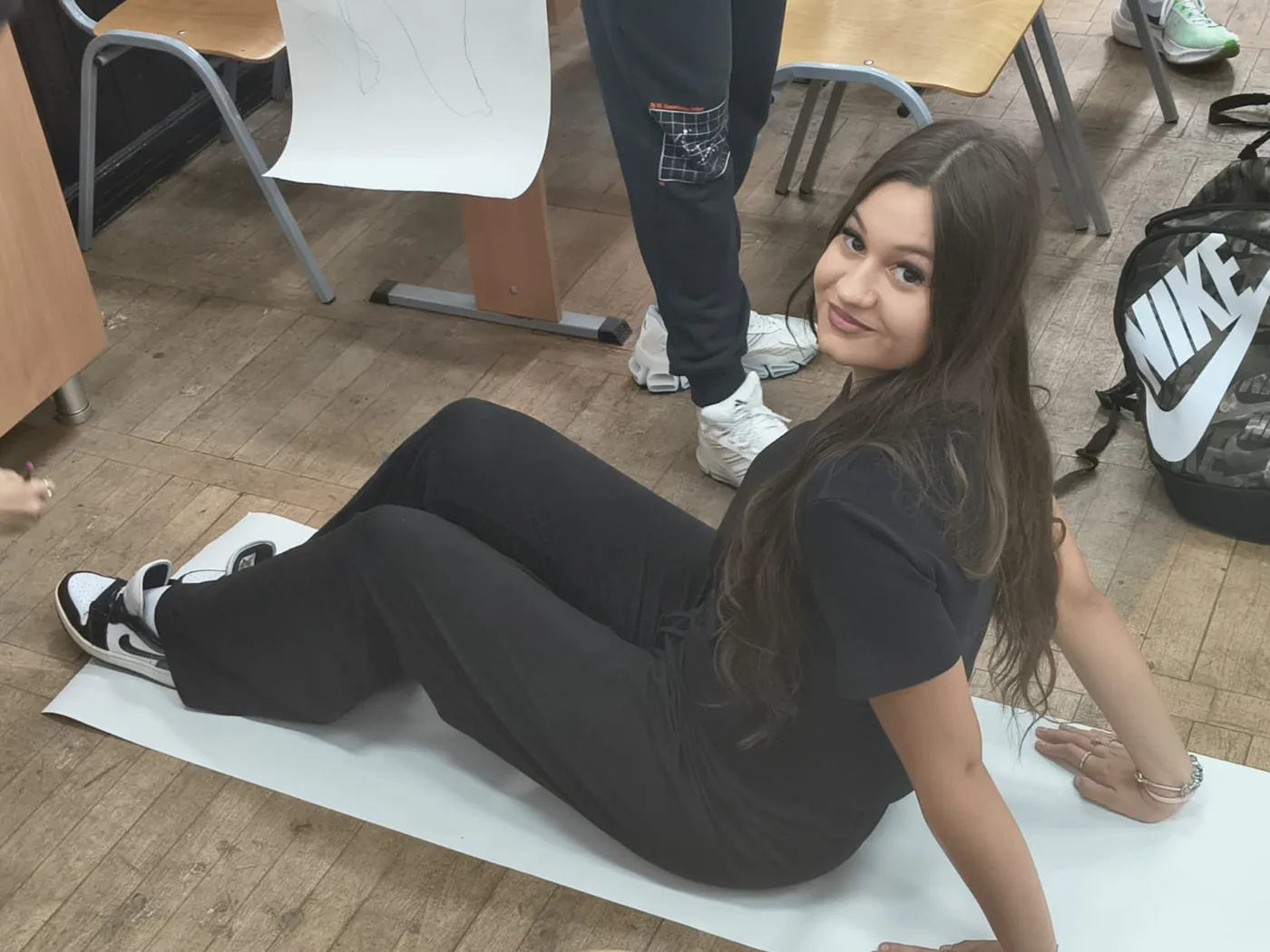
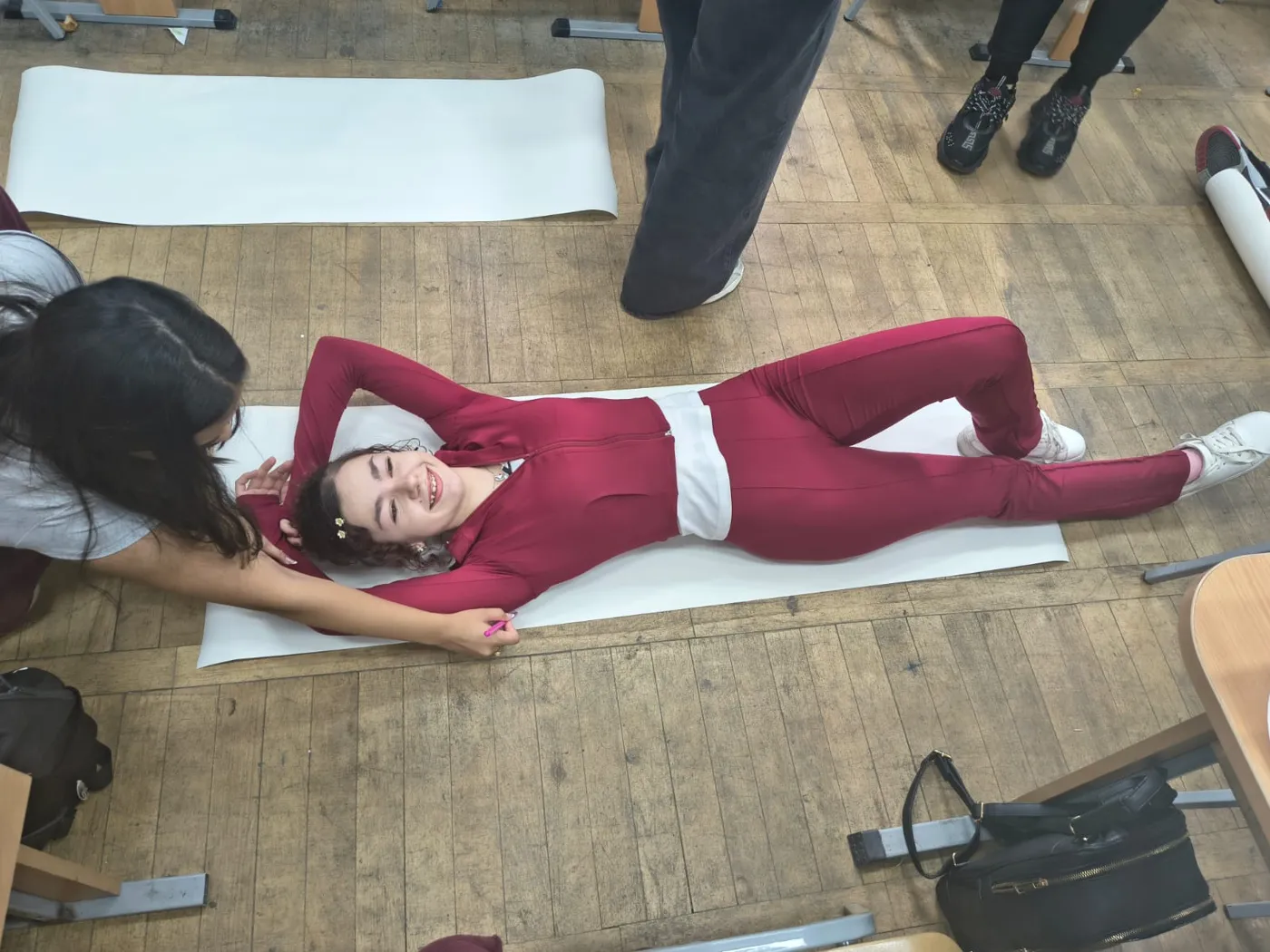
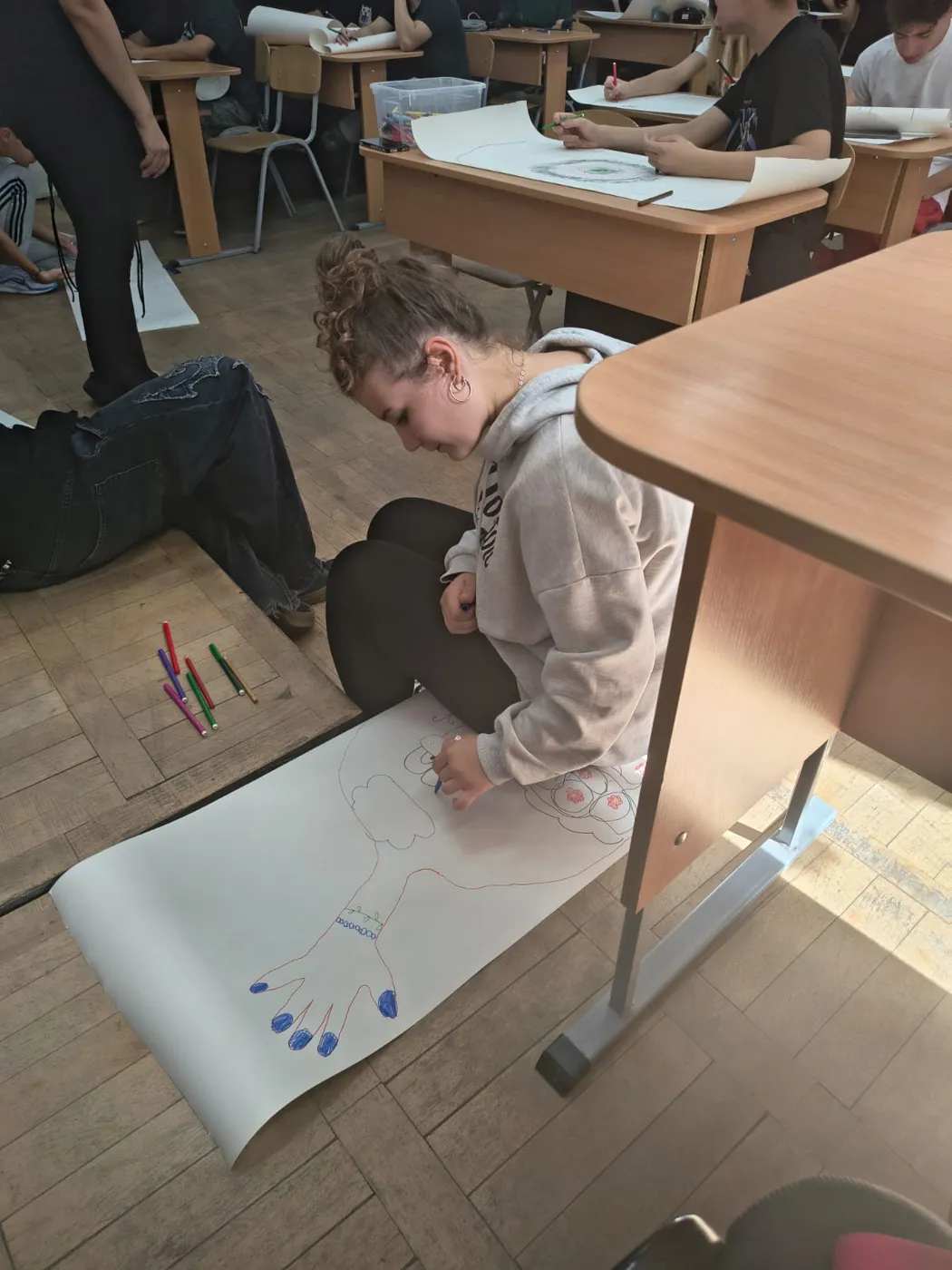
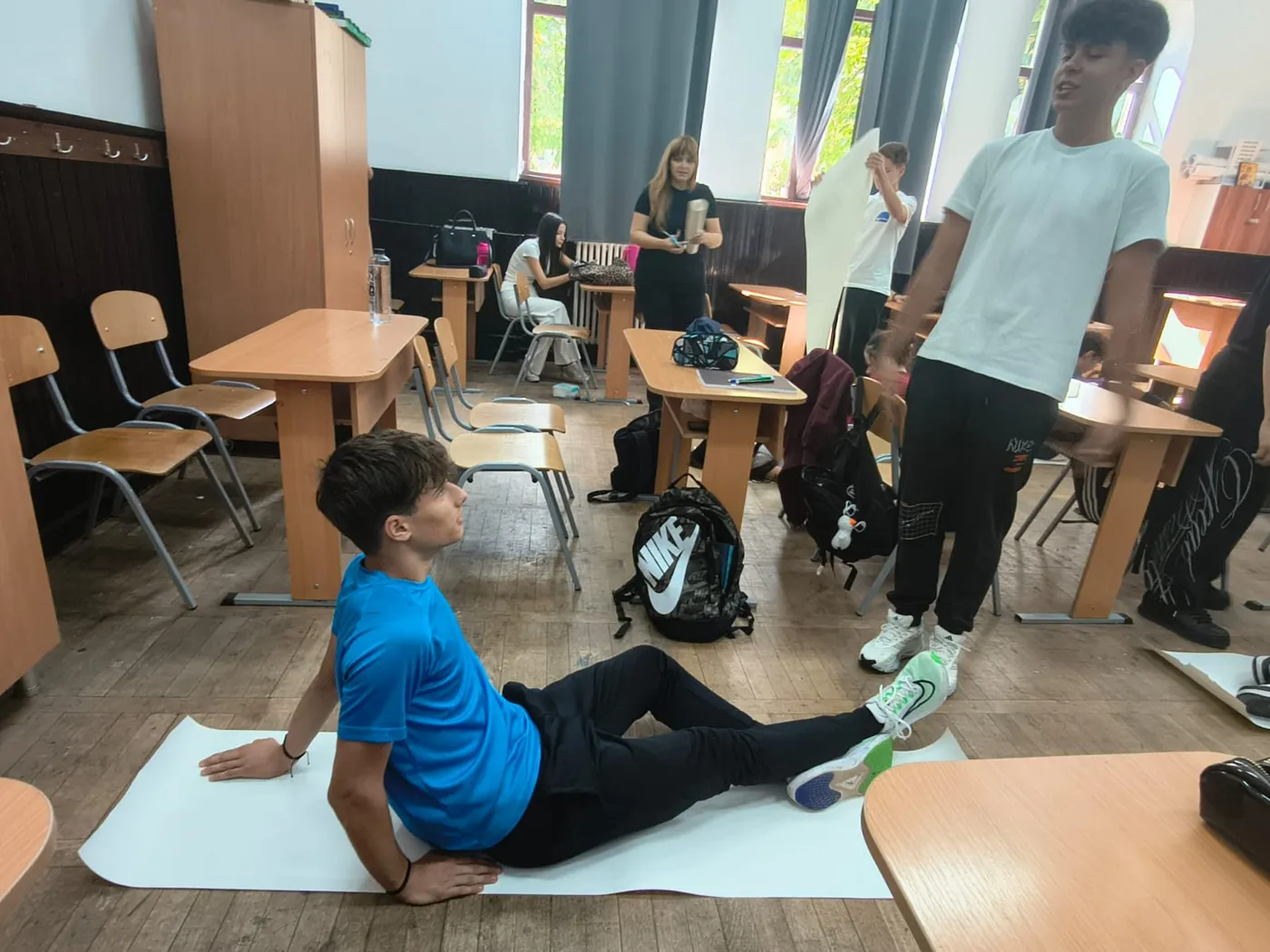
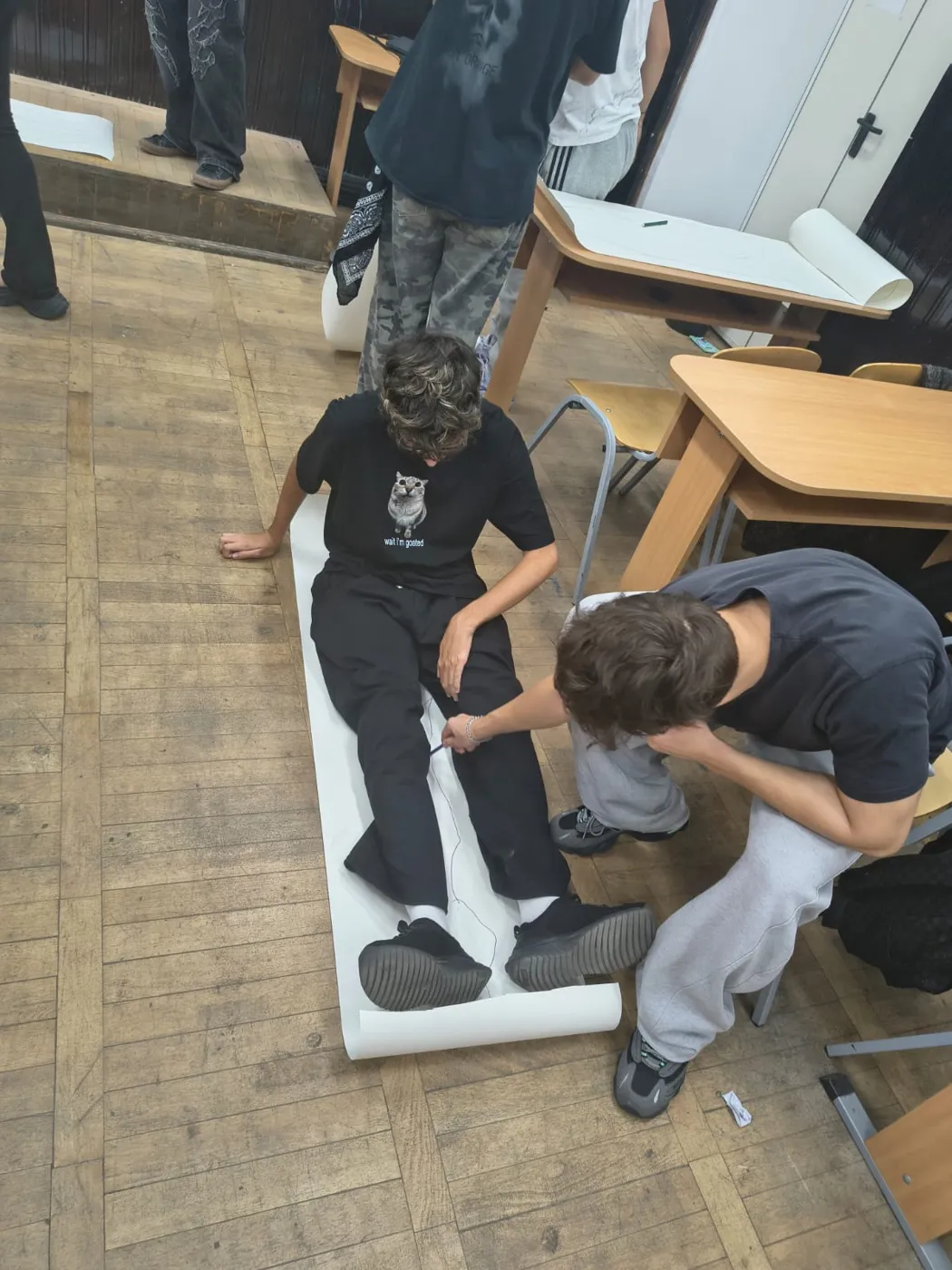
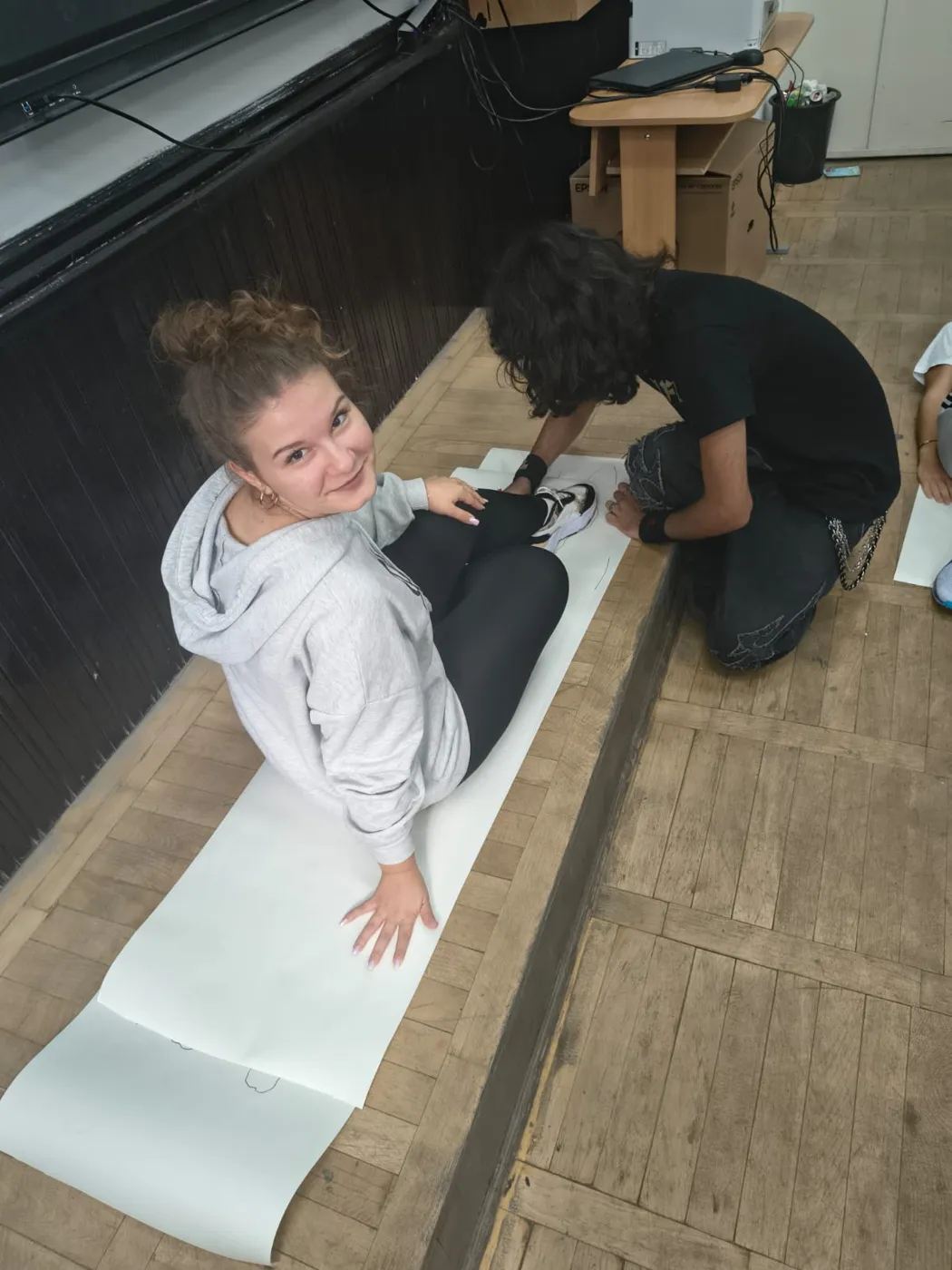
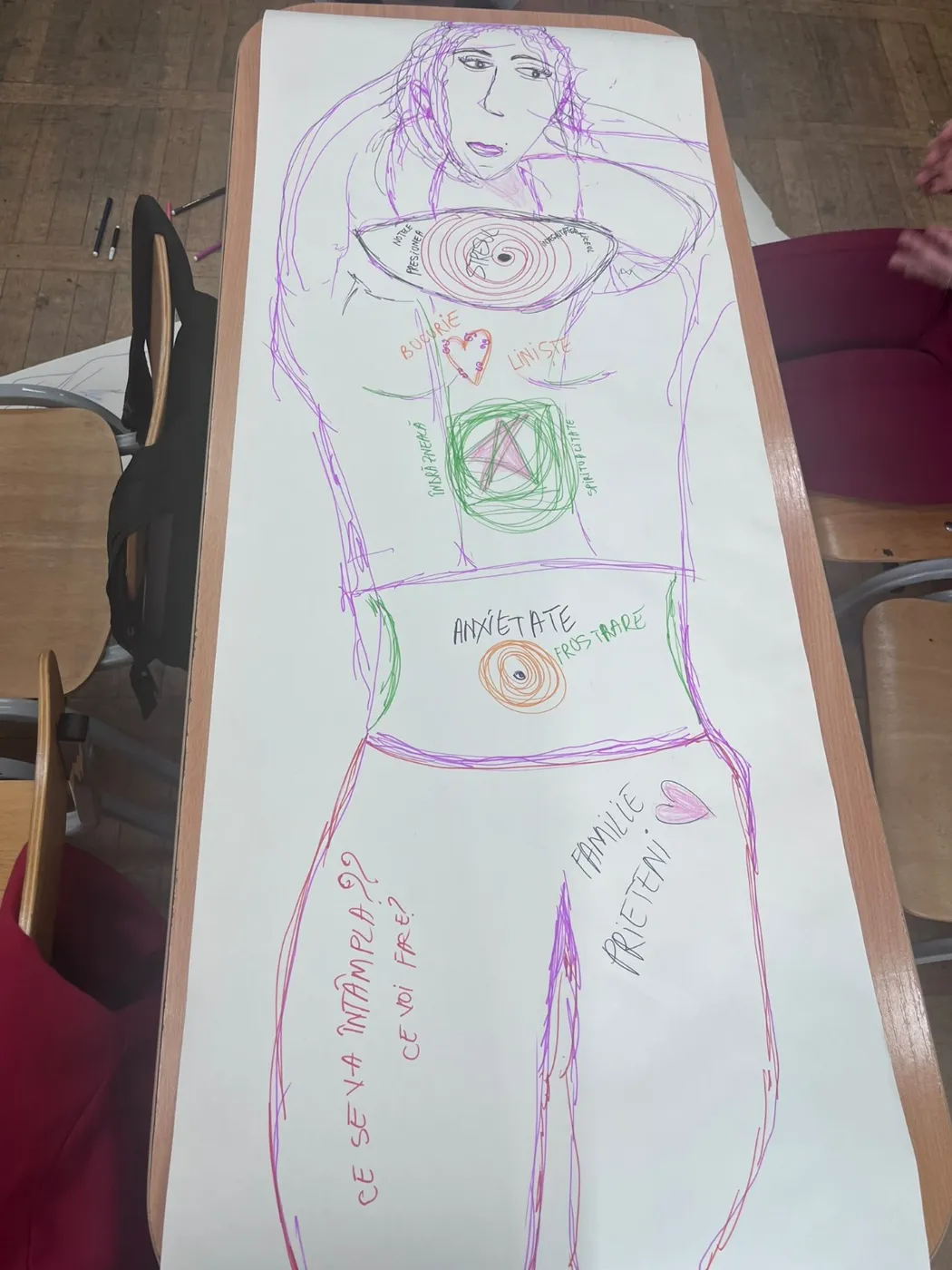
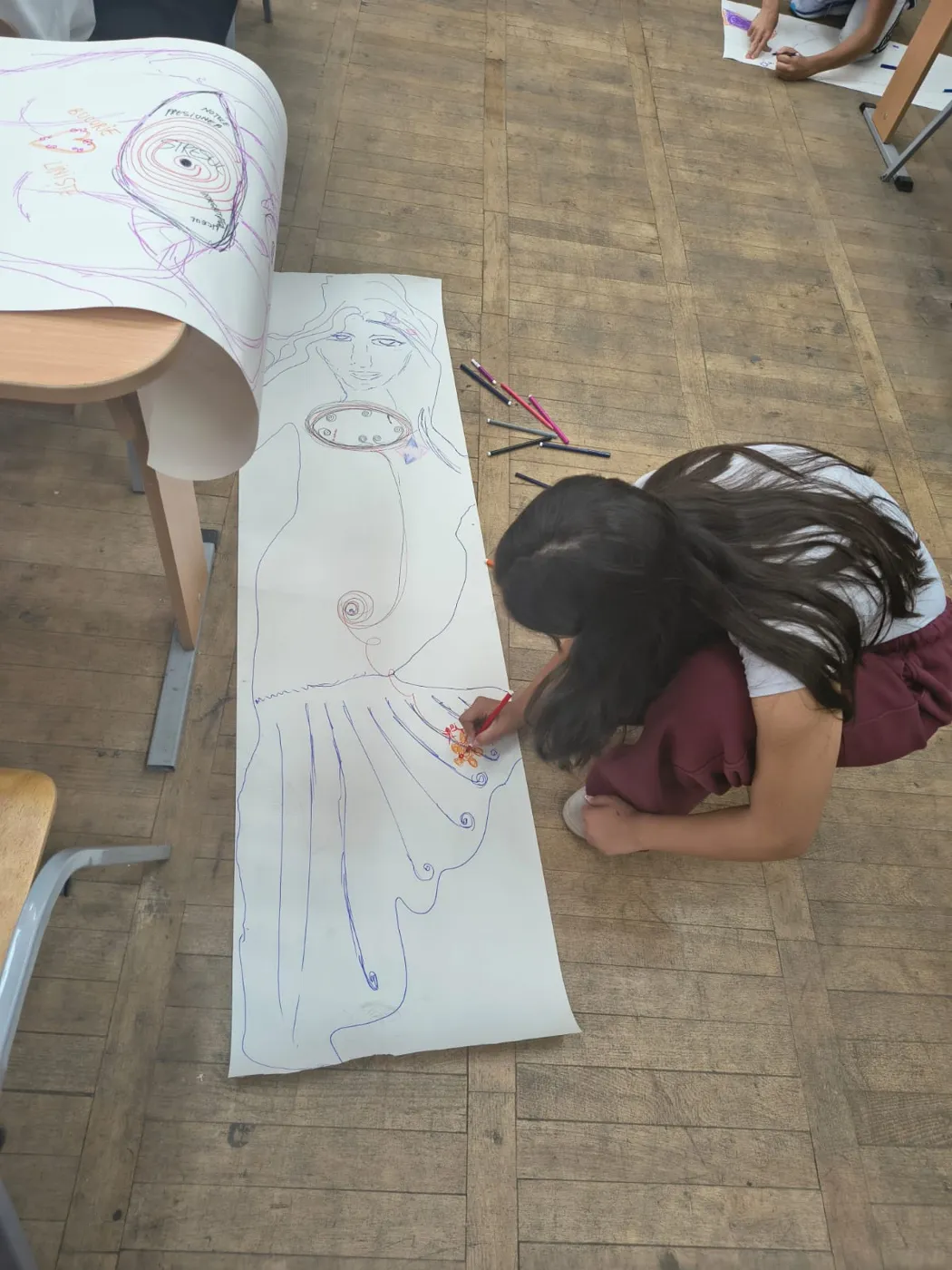
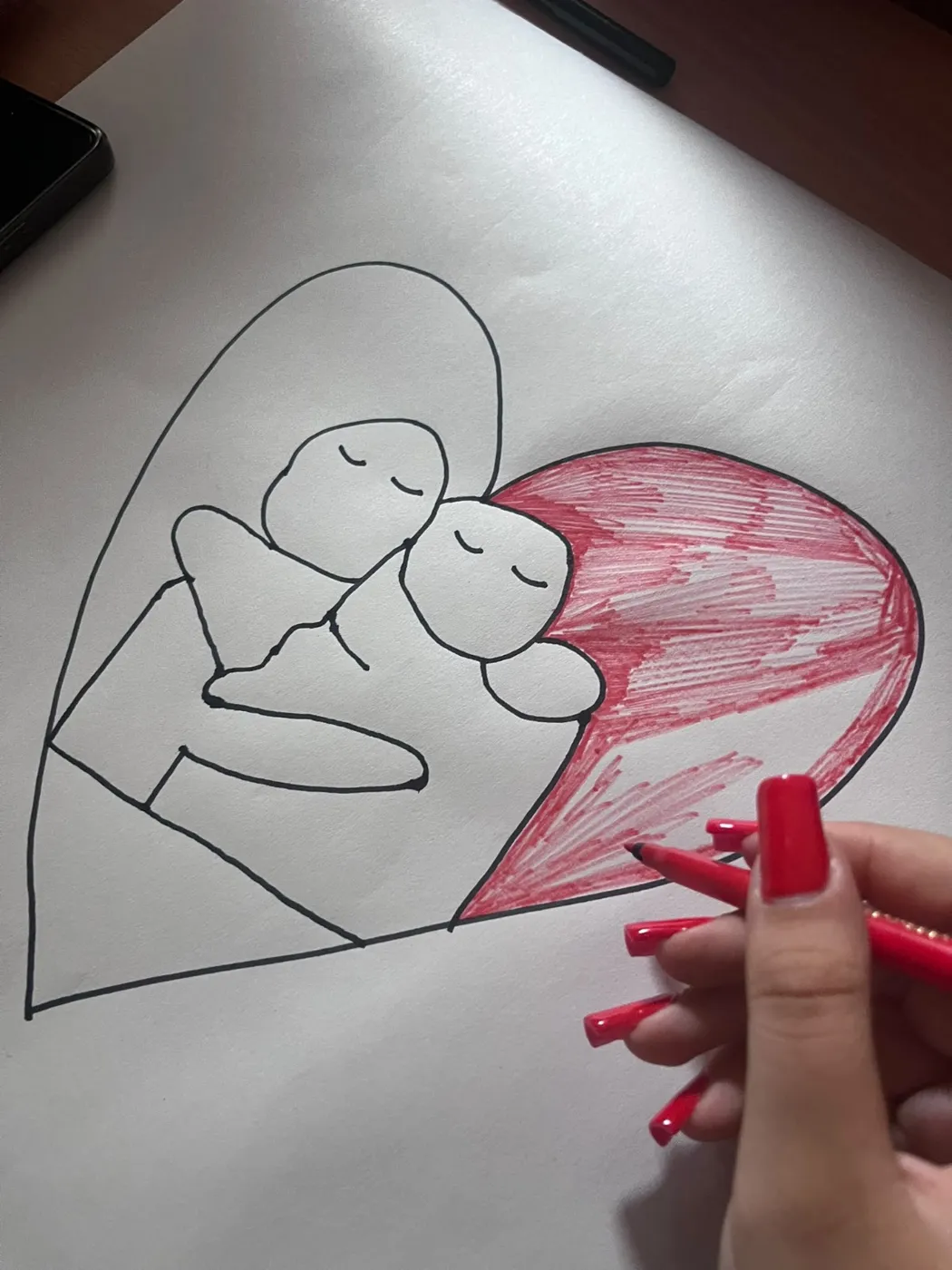
The working methodology uses art-therapy and educational-theatre tools to create a safe space for expression, reflection and intercultural dialogue. Workshops run weekly, with each session lasting roughly two hours. At the core of the methodology is the body-mapping technique, used as a tool for identity exploration and bodily awareness. Around this method, the project integrates storytelling, therapeutic fairy tales, role-play, theatrical improvisation, shadow theatre, labyrinth theatre, puppet and marionette theatre, movement and contemporary dance exercises, drawing and creative writing.
Exploring identity and belonging helps reduce teenagers' vulnerability to radicalization mechanisms rooted in exclusion, the need for validation and peer pressure.
In reflection and dialogue exercises facilitated by the project team, participants explore how stereotypes and discriminatory discourse spread in public and online spaces, how hate-based and intolerant messages affect social relationships, and the effects these have on vulnerable communities. The workshop aims both to develop emotional and creative expression and to strengthen group relationships, collaboration, critical thinking and active community participation.
Through the artistic and narrative content developed during the activities, participants are encouraged to build alternative perspectives and forms of cultural counter-narrative that push back against stereotypes, discriminatory discourse and anti-Roma extremism in public and online spaces.
To ensure the active participation of Roma people in the artistic and educational process, the project involves invited Roma artists, craftspeople and experts — such as Manole, graphic artist and jeweller; Icruș, jeweller; and Gelu Duminică, sociologist — who contribute through dialogues and reflection sessions on cultural identity, countering stereotypes and developing forms of cultural counter-narrative grounded in authentic experiences and perspectives.
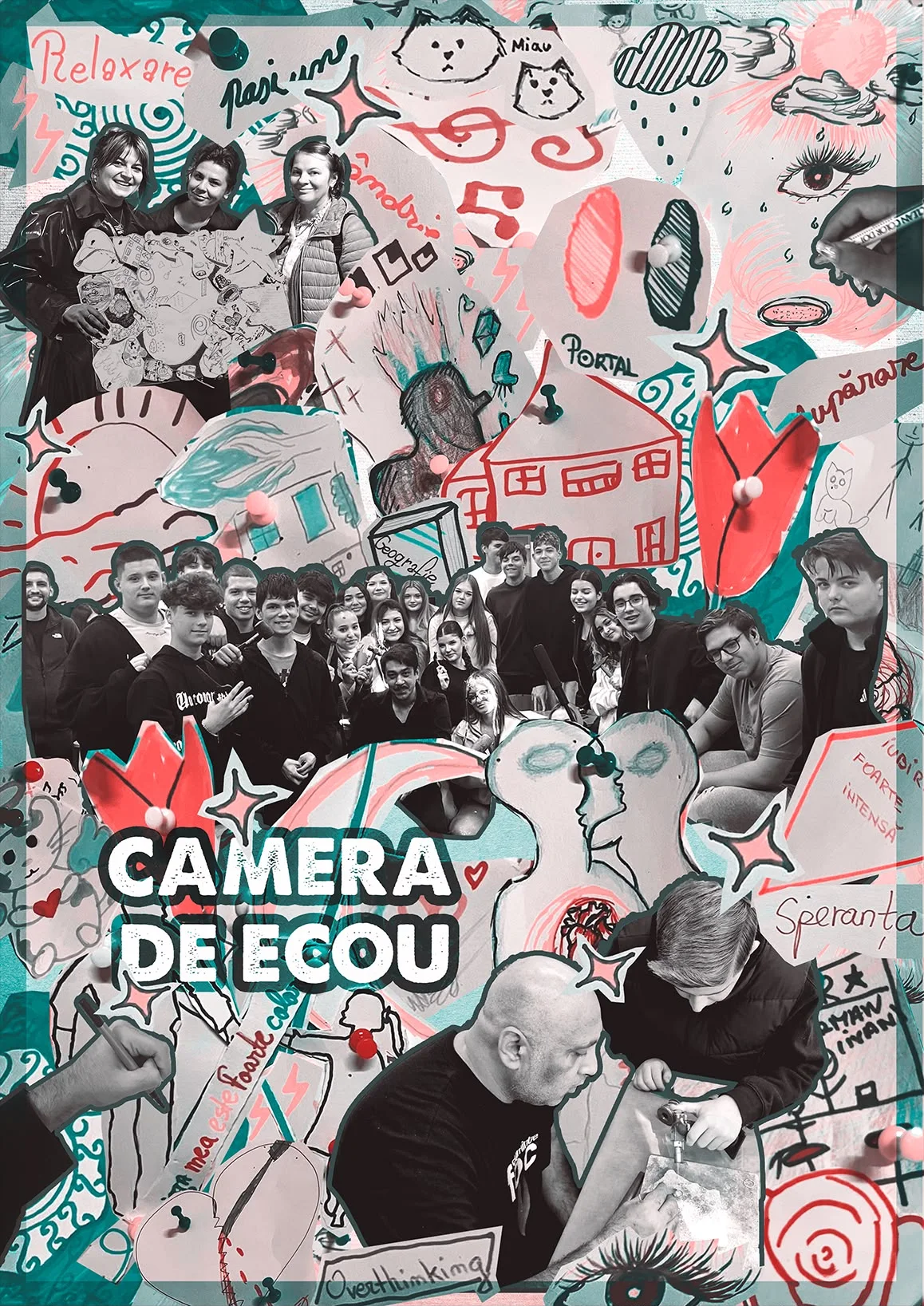 View larger
In the autumn of 2026, the classrooms of the “Grigore Cerchez” Technological College became, week after week, a space for work, play and dialogue. The teenagers taking part in “Camera de ecou” (Echo Chamber) traced the outlines of their bodies on paper, brought puppets and marionettes to life, told stories and asked questions about identity, belonging and the way prejudice comes to shape how we see others.
The meetings with this edition’s guests held a special place: artists and craftspeople who brought their own experiences and perspectives into the conversation. Their stories about roots and choices, heritage and work, and the courage to find one’s own path helped the young participants look beyond stereotypes. Through them, the project encouraged critical thinking, empathy and the ability to recognise discrimination and hate speech.
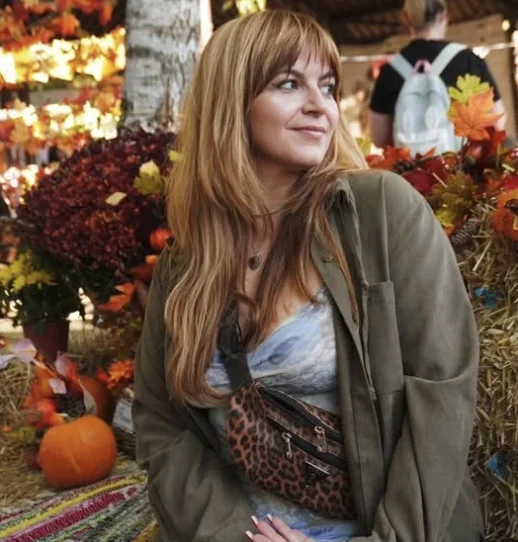
Between 14 September and 20 October 2026, Alina Tofan facilitated the personal development and artistic expression workshops for teenagers at the “Grigore Cerchez” Technological College. Through body mapping, theatre, storytelling and work with puppets and marionettes, participants explored identity, emotions and belonging, and talked about stereotypes and discrimination.
A trainer, coordinator of alternative environmental education projects and multidisciplinary artist (actress, performance artist and visual artist), Alina builds learning contexts in which direct experience, artistic expression and collaboration open up room for reflection and dialogue. Her practice brings together art, education, ecology and community engagement, combining artistic tools, somatic practices and ecofeminist approaches that explore the relationships between body, identity, community and environment. The programmes she coordinates address ecological education, climate resilience, media literacy and countering disinformation, with an emphasis on participation and collective responsibility.
She is a co-founder of the Plastic Art Performance Collective and helped introduce the concept of ecoperformance in Romania, in collaboration with TAANTEATRO from Brazil. She is currently a PhD candidate in Visual Arts at the National University of Arts in Bucharest, where she connects artistic research with alternative education, ecology and community engagement.
“I make my living from this art, and I want the noble craft of handmade jewellery to carry on, keeping its value and refinement in the contemporary world.”
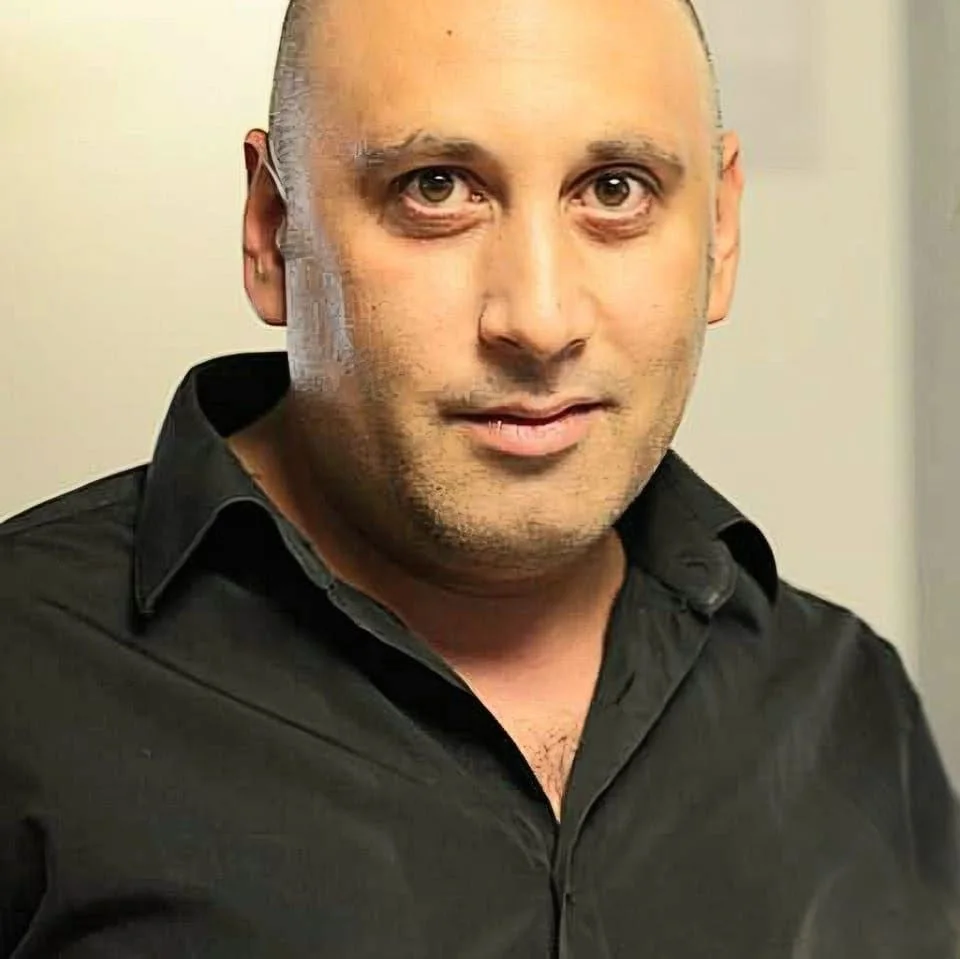
Icruș Florea keeps alive the legacy of an old tradition of Roma jewellers. He grew up watching the work being done in his family, and at 28 he made his first piece of jewellery from start to finish. The knowledge gathered in childhood and youth then took shape in a craft he practises today with respect for authentic techniques.
His story opened a conversation with the students about the link between one’s roots and one’s own choices, the value of Roma cultural heritage and the courage to discover your own path.
“You shape your talent. You become an artist. You are not born one.”
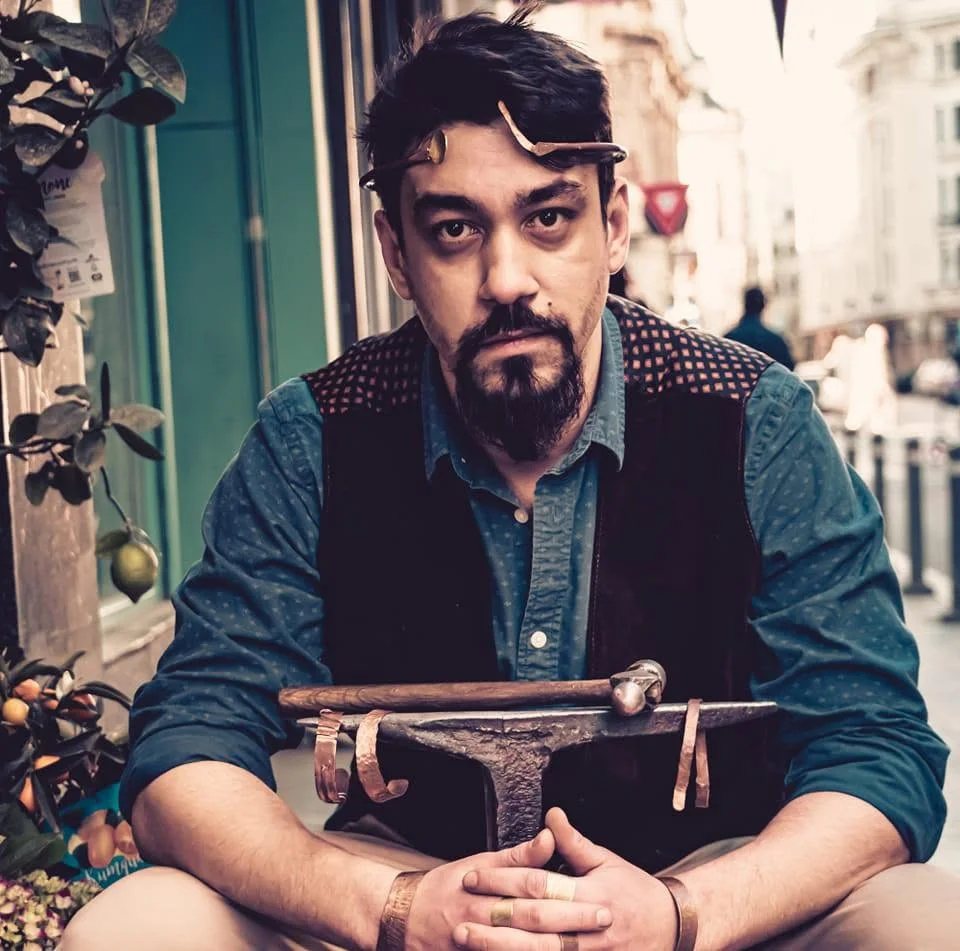
Manole Nistor handcrafts jewellery from copper and brass, photographs people and workshops, and designs logos, advertisements and animations. In 2023 he made and sold his first copper ring, the first step towards his own workshop. He learned the craft alongside Victor Clopotar and built his practice through exercise and perseverance.
He shared this journey with the participants, along with his belief that talent is not a given but is formed through work.
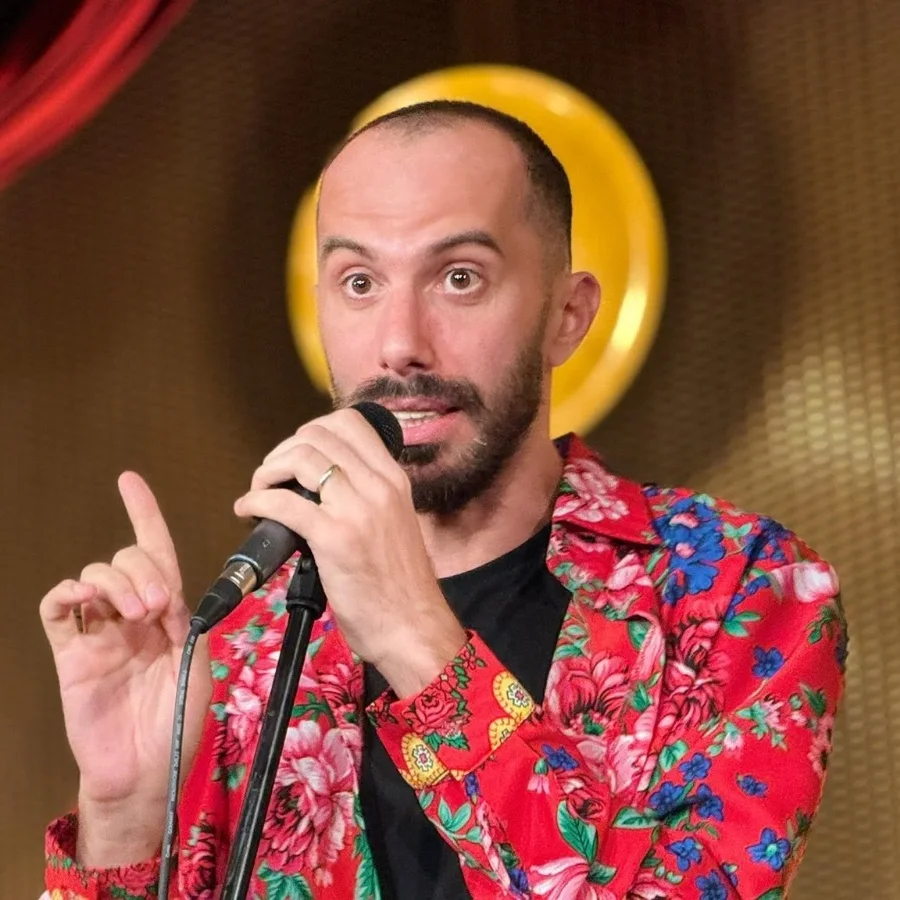
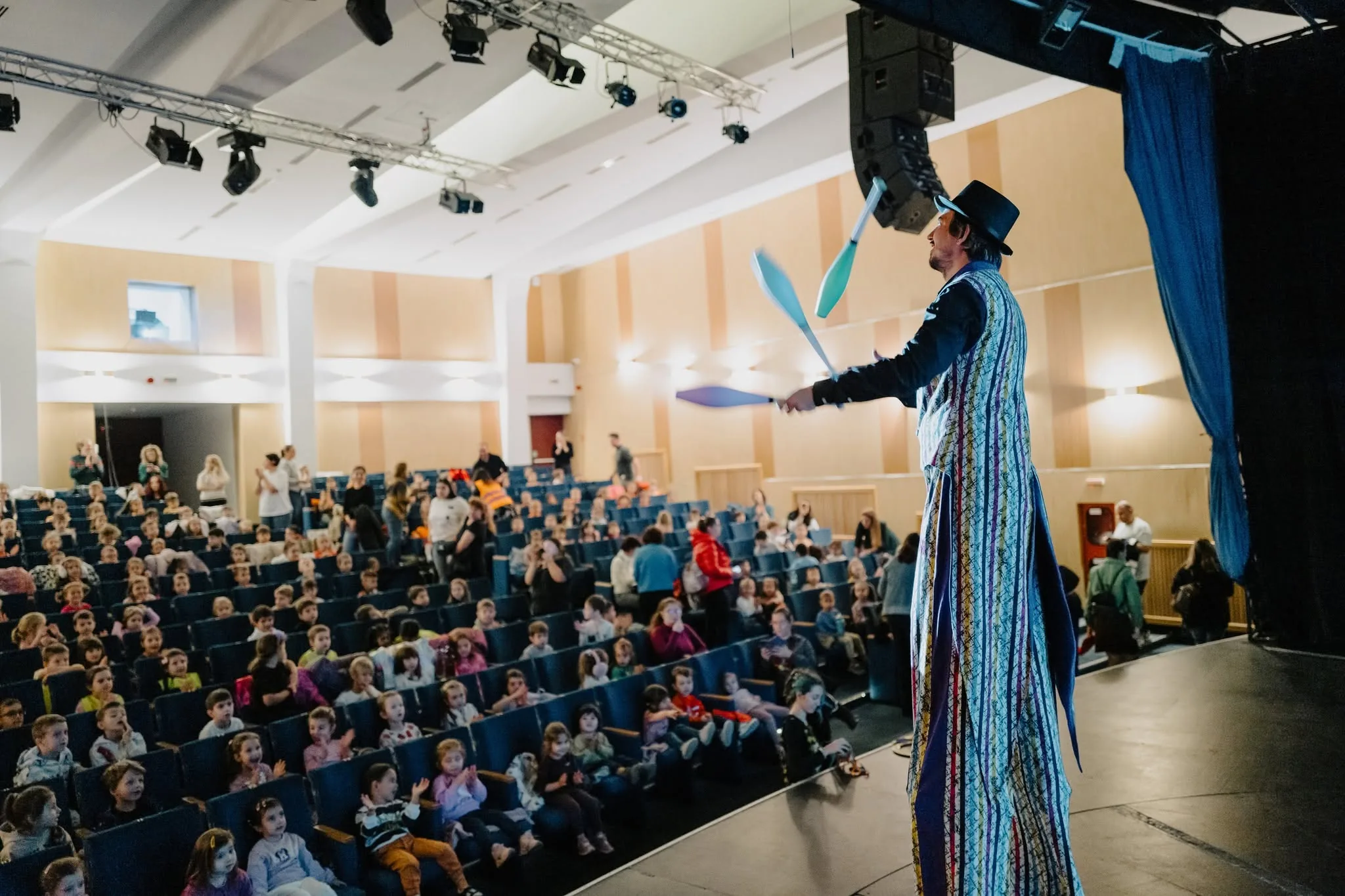
Răzvan Rotaru works at the intersection of theatre, contemporary dance, performance, circus, film and choreography. His practice is built around the body, play and the search for new forms of live expression, moving easily between acting, movement, improvisation, comedy and interaction with the audience.
He is interested in moments where different artistic languages meet and the live encounter between performer and spectator becomes part of the work. His practice includes theatre and dance performances, immersive and interactive projects, performative installations, experimental film and choreographic projects. Together with Filip Stoica, he developed “contempofun”, a hybrid form of dance-theatre that brings contemporary dance into dialogue with stand-up comedy.
He also works as a choreographer and movement director for theatre, musicals and film, and runs educational projects through Mike’s School of Dance in Buzău. For him, movement is a tool for storytelling, connection and play, a way for the body to communicate and create shared experiences.
Students watched up close as the jeweller worked with the torch and his tools.
The talk “What are you building?” and hammering at the anvil.
The story of one session, told in 15 frames. Click a photo to view it full size.
Through these encounters, “Camera de ecou” created a space where young people could ask questions, discover different perspectives and build relationships grounded in respect. A small but necessary step against prejudice and hate speech.

Organized by Asociația Culturală Metropolis, co-funded by ANR.




A cultural association, since 2011 — festivals, screenings and workshops for the general public and professionals in the cultural sector.